
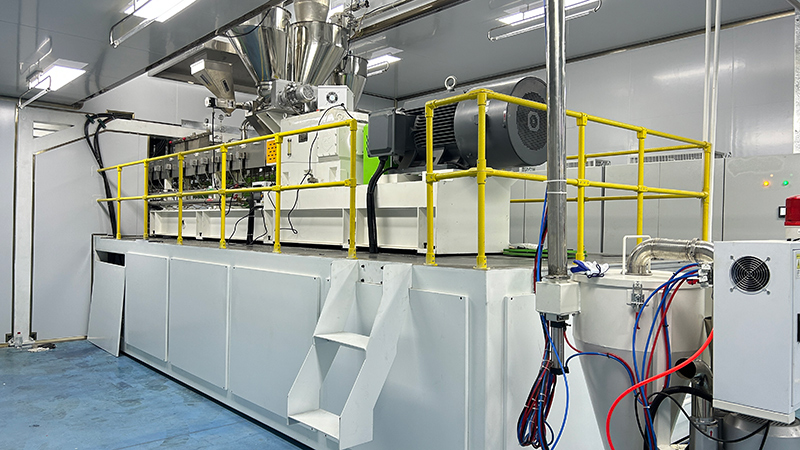
India’s furniture and interior decoration industry is undergoing a rapid transformation. Cities like Morbi và Rajkot in Gujarat — already global hubs for ceramic tiles and engineered wood furniture — are now emerging as prime destinations for GAG PET furniture decorative film manufacturing. Ahmedabad, Surat, Pune, and Hyderabad are not far behind, each offering established industrial estates, skilled polymer processing labor, and robust logistics corridors to ports like Mundra, JNPT, and Krishnapatnam. According to the India Brand Equity Foundation (IBEF), the Indian furniture market is projected to reach USD 37.7 billion by 2026, with decorative surface materials — including PET films, laminates, and membranes — among the fastest-growing segments. Against this backdrop, investing in a dedicated GAG PET furniture film extrusion line in India is not merely opportunistic; it is strategically sound.
This guide covers everything a serious investor or plant operator needs to know: what GAG PET co-extrusion technology is, how it differs from standard APET film lines, the full technical specification of a production-ready SWT-75S/65D-1400 system, site and utility requirements, and the total investment framework for Indian market conditions.
What Is GAG PET Furniture Decorative Film?
GAG refers to a three-layer co-extruded sheet structure: Glycol-modified PET (PETG) / Amorphous PET (APET) / Glycol-modified PET (PETG). The outer PETG layers provide outstanding optical clarity, surface gloss, and scratch resistance, while the APET core contributes structural rigidity and dimensional stability.
In the furniture and interior décor sector, GAG PET films serve as:
- High-gloss surface membranes for MDF, particle board, and plywood panels
- Decorative wrapping films for kitchen cabinet doors, wardrobes, and bathroom vanities
- Vacuum-forming substrates for 3D profile wrapping on furniture edges and frames
- Printable base films for digital UV printing on furniture surfaces
A well-calibrated GAG PET line producing 400–680 kg/h can supply enough decorative film to surface approximately 8,000–12,000 square meters of furniture panel per day — sufficient for a mid-to-large furniture manufacturer operating at scale.
How GAG PET Differs from Standard APET Sheet
| Property | Standard APET Sheet | GAG PET Film |
|---|---|---|
| Layer structure | Single layer | Three-layer (G/A/G) |
| Surface gloss | Moderate | Ultra-high mirror gloss |
| Scratch resistance | Standard | Enhanced (PETG outer layer) |
| Thermoforming range | Narrow | Wide (PETG flexibility) |
| Furniture lamination suitability | Limited | Optimized |
| Typical thickness | 0.3–2.0 mm | 0.2–1.5 mm |
Why India Is the Right Market for GAG PET Film Investment
1. Furniture Industry Growth and Import Substitution
India currently imports over USD 2.1 billion worth of furniture and furniture components annually (Ministry of Commerce, 2024). A significant portion of high-gloss PET decorative films used by domestic furniture manufacturers is sourced from China, South Korea, and Taiwan, China. As Indian manufacturers scale up — particularly in Morbi (Gujarat), Rajkot, Hosur (Tamil Nadu), and the Pune-Nashik belt — local film production eliminates 15–25% import cost overhead and reduces lead times from 60–90 days to under 7 days.
2. Gujarat: The Natural Epicenter
Morbi và Rajkot deserve special attention. Morbi processes over 80% of India’s ceramic tile output and has a dense cluster of furniture panel manufacturers supplying the tile-adjacent décor market. The Rajkot-Morbi highway corridor already houses polymer compounding plants, PET recycling units, and engineering plastics processors — precisely the supply chain ecosystem a GAG PET film line requires.
Key industrial hubs for GAG PET film production in India:
| City / Region | Industrial Strength | Nearest Major Port | Key Advantage |
|---|---|---|---|
| Morbi, Gujarat | Ceramics, furniture panels, polymer processing | Mundra (180 km) | Dense customer base, raw material supply |
| Rajkot, Gujarat | Engineering plastics, packaging | Mundra (220 km) | Skilled workforce, GIDC estates |
| Ahmedabad, Gujarat | Textiles, chemicals, automotive | Mundra (350 km) | Financial hub, logistics |
| Surat, Gujarat | Textiles, plastics packaging | Hazira / Nhava Sheva | PET recycling proximity |
| Pune, Maharashtra | Auto, electronics, furniture | JNPT (180 km) | High-end furniture manufacturing |
| Hyderabad, Telangana | Pharma, electronics, décor | Krishnapatnam (250 km) | New industrial parks |
| Hosur, Tamil Nadu | Auto components, furniture | Chennai (45 km) | IKEA and large-scale furniture clusters |
3. Raw Material Availability
India is one of the world’s largest producers of PET resin, with facilities operated by Reliance Industries, JBF Industries, and Dhunseri Petrochem. PETG resin, while currently imported, is available through distributors in Gujarat and Maharashtra with 10–15 day lead times from suppliers in South Korea and China. As domestic PETG compounding capacity expands, input costs are expected to fall further.
“India’s polymer processing sector is at an inflection point. The combination of cost competitiveness, growing domestic demand, and improving infrastructure makes it one of the most attractive destinations globally for specialty plastics investment.” — Plastivision Arabia Industry Report, 2024
Technical Specifications: SWT-75S/65D-1400 GAG PET Co-extrusion Line
The SWT-75S/65D-1400 is a production-proven co-extrusion system specifically engineered for PETG/APET/PETG furniture film. Below is the complete technical specification.
Core Configuration
| Parameter | Specification |
|---|---|
| Model | SWT-75S/65D-1400 |
| Extruder Configuration | 75S Ultra-High Torque Parallel Twin-Screw + 65D Single Screw |
| Raw Material | PETG, APET pellets and regular crushed materials (moisture ≤ 1,000 ppm) |
| Sheet Width | ≤ 1,200 mm |
| Sheet Thickness | δ = 0.2–1.5 mm |
| Output Capacity | 400–680 kg/h |
| Extrusion Sheet Speed | 4–50 m/min |
| Die Width | 1,350 mm |
| Roller Width | 1,400 mm |
| Power Supply | 415V / 3-Phase / 50Hz |
Main Extruder: 75S Ultra-High Torque Twin-Screw
The primary extruder handles the APET core layer and delivers the bulk throughput.
| Parameter | Specification |
|---|---|
| Screw Type | Parallel twin-screw, specially designed for PET |
| L/D Ratio | 44:1 |
| Screw Diameter | Ø71 mm |
| Screw Material | 38CrMoAlA nitrided steel, inner bore hardness HV 900–1,000 |
| Barrel Sections | 11 |
| Vacuum Exhaust Zones | 3 |
| Total Heating Power | 45 KW (cast copper + cast aluminum heaters, max 300°C) |
| Main Drive Motor | 132 KW (Siemens BEIDE / Innomotics or Wannan Motor) |
| Drive Control | INOVANCE or INVT frequency inverter |
| Gearbox | Ultra-high torque distribution gearbox with forced lubrication |
The three-zone vacuum degassing system is critical for PET processing: it removes residual moisture and volatile oligomers without the need for pre-drying in most conditions, reducing energy consumption and floor space requirements.
Auxiliary Extruder: 65D Single Screw
| Parameter | Specification |
|---|---|
| Screw Diameter | Ø65 mm single screw |
| L/D Ratio | 35:1 |
| Screw Material | 38CrMoAlA |
| Screw Hardness | Nitriding HV 900–980 |
| Main Drive Motor | 22 KW (Siemens BEIDE or Wannan) |
| Barrel Heating | Energy-saving ceramic heaters, ≈30 KW |
| Dehumidifying Dryer | 2 × 300 kg crystallization dehumidification systems |
Three-Roller Calender: Mirror-Finish Quality Control
| Roller | Size | Surface Finish |
|---|---|---|
| #1 Roller | Ø350 × 1,400 mm | Alloy roller, mirror surface |
| #2 Roller | Ø500 × 1,400 mm | Alloy roller, mirror surface |
| #3 Roller | Ø500 × 1,400 mm | Mirror surface |
- Chrome plating hardness: ≥ HRC62
- Chrome layer thickness: ≥ 0.08 mm
- Mirror polish roughness: ≤ Ra 0.0125 μm
- Roller bearings: NSK Japan
- Drive motors: 3 × 4.4 KW INOVANCE servo motors
- Temperature control accuracy: ±1°C (3 independent zones)
The internal spiral flow channels in the rollers ensure uniform temperature distribution across the full 1,400 mm width — critical for consistent gloss and thickness in furniture film applications.
Extrusion Die: JC TIMES Coat-Hanger Design
| Parameter | Specification |
|---|---|
| Brand | JC TIMES |
| Structure | Coat-hanger flow channel |
| Die Width | 1,350 mm |
| Product Width | 1,200 mm |
| Die Lip Thickness | 0.2–1.6 mm |
| Upper Lip Adjustment | Push-type elastic micro-adjustment |
| Surface Treatment | High-precision chrome plating ≥ 0.06 mm; Ra ≥ 12 |
Complete Equipment List
The full production line comprises 22 major components:
- 75S Ultra-High Torque Parallel Twin-Screw Extruder — 1 set
- 65/33 Single Screw Extruder — 1 set
- Dehumidifying Drying System (300 kg × 2) — 2 sets
- Volumetric Feeder (twin-screw, 200L hopper) — 2 sets
- Color Masterbatch Feeder — 1 set
- Special Vacuum System (Water Ring + Roots + Roots, 100 Pa) — 1 set
- Vacuum Feeder — 1 set
- Hydraulic Screen Changer (dual-station, non-stop) — 2 sets
- Melt Metering Pump (250CC / 46CC, GEFRAN pressure sensors) — 2 sets
- Extrusion Die — JC TIMES, 1,350 mm — 1 set
- Three-Roller Calender (Ø350 + Ø500 + Ø500 × 1,400 mm) — 1 set
- Roller Temperature Control System (3 zones, ±1°C) — 1 set
- Cooling Bracket (Ø80 × 1,200 mm aluminum rollers) — 1 set
- Inline Film Lamination Device (double-sided, 1,200 mm) — 1 set
- Sheet Edge Trimming + Scrap Winding Device — 1 set
- Haul-Off (servo drive, sync with calender) — 1 set
- Sheet Cutting Machine (max 30 cycles/min, 10–3,000 mm length) — 1 set
- Stacking Robot — 1 set
- Electrical Power System (Siemens PLC, Schneider contactors, CHINT breakers) — 1 set
- PLC Control System with MCGS HMI (Chinese/English) — 1 set
- Static Brush — 2 sets
- Spare Parts Kit — 1 set
Get a tailored quotation & layout drawing within 3 business days
Site and Utility Requirements for India
Planning your plant layout correctly from day one prevents costly retrofits.
Production Space
| Requirement | Specification |
|---|---|
| Floor area | 30 m (L) × 6 m (W) minimum |
| Ceiling height | ≥ 5 m |
| Floor load | Reinforced concrete, ≥ 5 tons/m² under extruder zone |
Utilities
| Utility | Requirement | Indian Context |
|---|---|---|
| Power supply | 415V / 3-phase / 50Hz | Standard industrial supply in Gujarat GIDC estates |
| Installed power | ≈ 350 KW (actual consumption 70% = ≈ 245 KW avg.) | Plan for 400 KW transformer with 25% headroom |
| Cooling water | 40 m³/h, ≤ 20°C, ≥ 0.4 MPa | Closed-loop cooling tower recommended for Indian summer conditions (ambient up to 45°C) |
| Compressed air | 1 m³/h at 0.5–0.8 MPa | Standard screw compressor sufficient |
| Lubricating oil | ExxonMobil grade | Available via authorized distributors in Ahmedabad and Mumbai |
India-specific note: In states like Gujarat and Maharashtra, industrial water hardness can exceed 500 ppm. Install a water softener unit upstream of the cooling circuit to prevent scaling in the roller temperature control system and melt pump cooling channels. This step is not optional — hard water-induced scaling can reduce roller temperature control accuracy from ±1°C to ±5°C within 12 months, directly impacting sheet gloss consistency.
Staffing requirement: 1–2 operators per shift for normal production. With PLC automation and MCGS HMI interface, a trained operator can manage the full line including screen changing (non-stop dual-station design).
Investment Framework and ROI Considerations
A detailed financial model depends on your specific product mix, Indian state incentives, and local utility tariffs. The following framework provides a reliable starting point.
Capital Expenditure (Indicative)
| Item | Indicative Range (USD) |
|---|---|
| Complete SWT-75S/65D-1400 production line | USD 320,000–420,000 (FOB China) |
| Freight, customs duty (12–18%), GST | USD 55,000–85,000 |
| Civil works, utilities, installation | USD 25,000–45,000 |
| Working capital (3-month raw material) | USD 40,000–60,000 |
| Total estimated project cost | USD 440,000–610,000 |
Note: Customs duty on plastic extrusion machinery under HS Code 8477 varies. Verify with a licensed customs broker. Under India’s EPCG scheme, exporters may qualify for duty concessions on capital equipment.
Revenue Potential
At 400 kg/h output, 20 hours/day, 300 days/year:
- Annual output: 2,400 tonnes/year
- GAG PET furniture film selling price in India: USD 1,800–2,400/tonne
- Gross annual revenue: USD 4.3M–5.8M
With raw material (APET + PETG) cost at approximately USD 1,100–1,400/tonne and processing costs at USD 200–280/tonne, EBITDA margins of 20–30% are achievable for well-run operations.
Want a detailed quotation and technical layout drawing for your India plant? Contact our engineering team at tz-machinery.com — we provide site-specific proposals within 3 business days.
Key Procurement and Quality Considerations
When sourcing a GAG PET furniture film line for an Indian installation, these are the non-negotiable quality benchmarks:
1. Vacuum system specification: The three-stage vacuum (water ring + Roots + Roots pump) achieving 100 Pa ultimate pressure is not a luxury — it is what allows processing of PETG/APET blends without mandatory pre-drying. Inferior systems operating at 500–800 Pa typically require a full crystallization drying cycle, adding 4–6 hours to production startup and consuming 30–50 KW extra energy.
2. Roller chrome quality: Mirror roughness ≤ Ra 0.0125 μm and chrome hardness ≥ HRC62 are the benchmarks that determine whether your film achieves the 90+ GU (gloss units) finish required for premium furniture laminates. Insist on third-party roller surface inspection reports.
3. Drive brands matter: Siemens main motor (132 KW), NSK bearings, Schneider contactors, and INOVANCE/INVT inverters are the specification baseline. Substituting these with unbranded alternatives to reduce cost invariably leads to higher maintenance downtime in the Indian industrial environment.
4. Die precision: The JC TIMES coat-hanger die with chrome thickness ≥ 0.06 mm and Ra ≥ 12 surface finish is critical for achieving ±0.03 mm sheet thickness uniformity — the tolerance level required by furniture lamination machinery.
Frequently Asked Questions
What is a GAG PET furniture decorative film production line?
A GAG PET furniture decorative film production line is a co-extrusion system that simultaneously processes three layers of PET material — PETG/APET/PETG — into a single high-gloss, high-clarity film sheet used to surface furniture panels, kitchen cabinets, and interior décor elements. The three-layer structure combines the surface quality of PETG with the structural performance of APET, producing a film superior to single-layer alternatives for furniture applications.
Which Indian cities are best for setting up a GAG PET film plant?
Morbi and Rajkot in Gujarat are the most strategically advantageous locations due to their established furniture panel manufacturing clusters, proximity to Mundra Port, and existing polymer processing ecosystem. Ahmedabad, Surat, Pune, and Hosur (Tamil Nadu) are strong secondary choices, each offering proximity to major furniture manufacturers or ports. All these cities have GIDC or MIDC industrial estates with 415V three-phase power and industrial water supply.
What is the output capacity of the SWT-75S/65D-1400 line?
The SWT-75S/65D-1400 produces 400–680 kg/h of GAG PET sheet, depending on raw material type and target sheet thickness. At 0.5 mm thickness and full production speed (up to 50 m/min), the line operates at the upper end of this range. At 1.0–1.5 mm thick sheets, output is typically in the 400–500 kg/h range.
What raw materials does the line require?
The line processes PETG pellets (for the outer G-layers), APET pellets (for the core A-layer), and regular crushed/recycled PET materials with moisture content ≤ 1,000 ppm. The dehumidifying drying system (2 × 300 kg capacity) handles moisture control before extrusion. APET is widely available in India through Reliance and JBF Industries. PETG is currently imported, primarily from South Korea (SK Chemicals) and China.
How much power does the production line consume?
Installed power is approximately 350 KW. Actual operational power consumption averages 70% of installed capacity, i.e., approximately 245 KW per hour under normal production conditions. At an Indian industrial tariff of ₹7–9/kWh, electricity cost is approximately ₹1,700–2,200 per tonne of output — a manageable input cost within the overall margin structure.
Can the line handle recycled PET material?
Yes. The parallel twin-screw design of the 75S extruder, combined with the three-stage vacuum degassing system (100 Pa ultimate pressure), allows processing of pre-crushed recycled PET at up to 20–30% blend ratios for the APET core layer without compromising sheet transparency or surface gloss. Full recycled material runs require material quality testing and typically produce second-grade film suitable for non-decorative packaging applications.
What is the minimum factory space required in India?
The minimum production area is 30 m (length) × 6 m (width) with a ceiling height of at least 5 m. For a complete plant with raw material storage, finished goods area, and maintenance clearance, a 30 m × 15 m industrial bay is recommended. Standard GIDC plots in Morbi and Rajkot range from 500 m² to 2,000 m², accommodating this layout comfortably.
Summary: Is a GAG PET Furniture Film Line Right for Your India Investment?
India’s furniture decoration sector, anchored in industrial cities from Morbi and Rajkot đến Hosur and Hyderabad, is moving rapidly toward domestic production of high-performance PET films. The combination of growing demand, import substitution opportunity, available raw materials, and improving logistics infrastructure makes 2025–2026 the optimal window to establish production capacity.
The SWT-75S/65D-1400 GAG PET co-extrusion line delivers:
- 400–680 kg/h output of PETG/APET/PETG furniture film
- Sheet widths up to 1,200 mm, thickness 0.2–1.5 mm
- Mirror-finish calender rollers at Ra ≤ 0.0125 μm
- PLC automation with 1–2 operator staffing per shift
- Non-stop dual-station screen changing for maximum uptime
With total project investment in the USD 440,000–610,000 range and gross annual revenues potentially exceeding USD 4–5.8 million at scale, this represents one of the more attractive manufacturing entry points in India’s plastics processing sector.
Ready to move forward? Our engineering team provides complete project proposals — equipment quotation, site layout drawings, utility planning, and training schedule — tailored to your specific Indian location. Request a proposal at tz-machinery.com.