
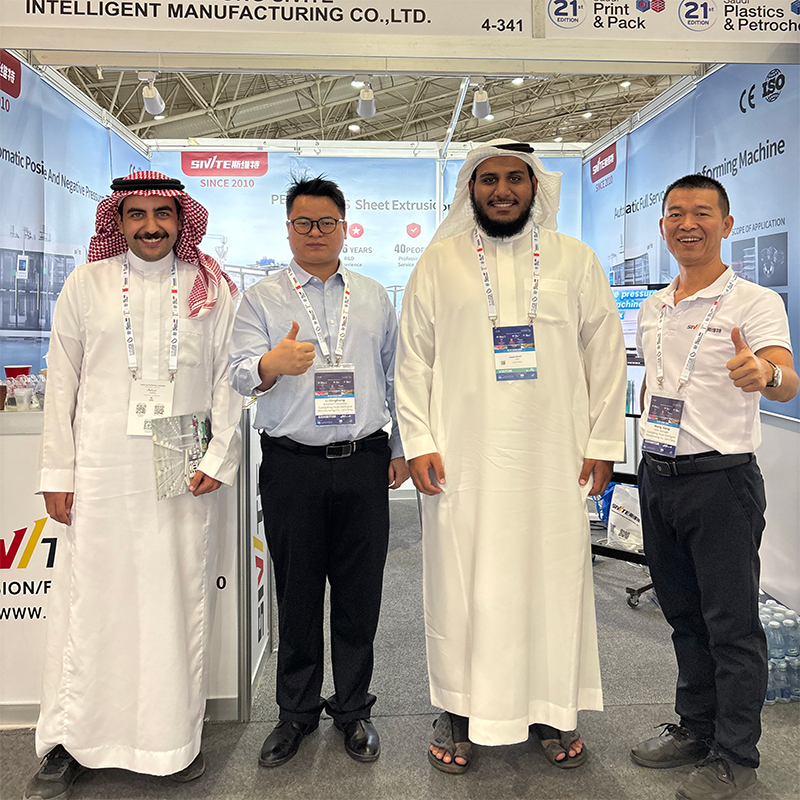
Une machine de thermoformage destinée à l’emballage alimentaire est un système de production automatisé qui chauffe des feuilles thermoplastiques — PP, PET, PS et PLA — et les transforme en récipients finis grâce à un processus en ligne continu comprenant le déroulement des feuilles, le chauffage à deux zones, le formage par pression positive/négative, la découpe de précision et l’empilage automatisé. Dans les corridors de production alimentaire en pleine expansion de l’Arabie saoudite — des parcs de transformation alimentaire centralisés de Riyad aux installations d’emballage destinées à l’exportation situées à proximité du port de Djeddah, en passant par les villes industrielles intégrées à l’industrie pétrochimique de Jubail et Yanbu, jusqu’aux pôles émergents de transformation des plastiques de la ville industrielle de Sudair et de la deuxième ville industrielle de Dammam —, la demande en machines de thermoformage à haut rendement et à servocommande a dépassé l’offre locale, poussant les transformateurs d’emballages saoudiens à évaluer les fabricants internationaux en fonction de leurs capacités techniques, de leur service après-vente et du coût total de possession, plutôt que du seul prix d’achat.
Qu'est-ce qu'une machine de thermoformage pour l'emballage alimentaire ?
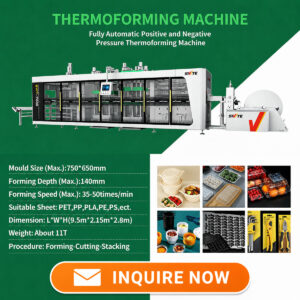
Une machine de thermoformage transforme des rouleaux de plastique plats en récipients alimentaires tridimensionnels en chauffant la feuille jusqu'à son point de ramollissement, en la pressant dans la cavité d'un moule grâce à une combinaison de vide et d'air comprimé, en découpant les pièces formées à partir de la bande et en empilant les récipients finis — le tout au cours d'une séquence continue et automatisée.
Ce procédé élimine la manipulation manuelle des feuilles entre les postes. La matière première arrive sous forme de rouleau à l’extrémité de déroulement. Elle traverse des fours de chauffage à zones indépendantes où des briques réfractaires chauffent la feuille jusqu’à la température de formage. Au niveau de la station de formage, un dispositif d’assistance à servocommande étire la feuille ramollie tandis qu’une pression positive par le haut et un vide par le bas poussent le matériau contre la surface refroidie du moule. La feuille formée avance vers la station de découpage, où un mécanisme de serrage de 80 tonnes (sur les machines à l’échelle industrielle) découpe les récipients individuels à partir de la bande. Les pièces finies parviennent ensuite à la station d’empilage pour être comptées et alignées automatiquement.
Configurations de thermoformage à trois stations — formage, perforation, empilage — couvrent la plupart des applications d’emballage alimentaire. Les modèles à quatre stations intègrent un module de perforation en ligne pour les couvercles ventilés, les barquettes de fruits et légumes nécessitant un drainage et les récipients devant comporter des œillets de suspension pour la vente au détail. Pour la production spécifique de gobelets, il existe des stations deux-en-un de formage et de découpe (comme le Machine de thermoformage de gobelets en plastique TZ-750B) réduisent l'encombrement de la machine tout en conservant des cadences pouvant atteindre 28 cycles par minute.
Le marché des équipements d'emballage alimentaire en Arabie saoudite
Le secteur des emballages thermoformés en Arabie saoudite répond à deux types de demande distincts. Le premier concerne l’industrie agroalimentaire nationale — transformateurs laitiers, fabricants de plats préparés, chaînes de boulangerie et conditionneurs de produits frais —, concentrée dans les zones industrielles de Riyad et les parcs agroalimentaires de Djeddah. Le second est le marché de la réexportation via les ports de la mer Rouge et du golfe Persique, où les transformateurs basés en Arabie saoudite fournissent des produits alimentaires conditionnés aux pays voisins du CCG et aux marchés d’Afrique de l’Est.
Plusieurs facteurs structurels font de l'Arabie saoudite un marché à forte croissance pour les machines de thermoformage :
- Demande alimentaire liée à la croissance démographique : La population de l'Arabie saoudite dépasse les 36 millions d'habitants, avec un âge médian inférieur à 32 ans, ce qui entraîne une croissance soutenue de la consommation de plats préparés et de produits conditionnés en portions individuelles.
- La diversification industrielle dans le cadre de la Vision 2030 : Les mesures d'incitation gouvernementales en faveur du secteur manufacturier non pétrolier ont attiré des investissements dans des installations de transformation du plastique situées dans les cités industrielles de Sudair, Jubail, Yanbu et Dammam.
- Avantage lié aux matières premières pétrochimiques : La production nationale de résines PP et PET par SABIC et d'autres producteurs pétrochimiques confère aux transformateurs saoudiens un avantage en termes de coûts des matières premières par rapport à leurs concurrents qui dépendent des importations.
- Dynamique de substitution des importations : Les marques alimentaires saoudiennes privilégient de plus en plus les emballages thermoformés localement plutôt que les contenants finis importés, ce qui stimule la demande en capacités de production nationales.
Pour un transformateur d'emballages saoudien qui envisage l'achat d'une machine de thermoformage, la question essentielle n'est pas de savoir quel fabricant propose le prix FOB le plus bas, mais quel fournisseur offre la fiabilité technique, la flexibilité en matière de matériaux et le service après-vente nécessaires pour assurer une production 24 heures sur 24 dans un environnement d'exploitation à haute température.
Les six villes saoudiennes stratégiques pour la fabrication d'emballages thermoformés
Chacune des villes industrielles d'Arabie saoudite joue un rôle spécifique dans la chaîne d'approvisionnement du secteur de l'emballage alimentaire. Comprendre le profil de production de chaque site aide les transformateurs à déterminer où les capacités de thermoformage sont les plus urgentes — et où un investissement ciblé dans les équipements de production offre le retour sur investissement le plus rapide.
Riyad — Pôle central de transformation et de distribution alimentaire
Riyad est le plus grand marché de consommation d’Arabie saoudite et le siège de marques alimentaires nationales, d’entreprises de transformation laitière et d’opérateurs de cuisines centralisées. Les zones industrielles de la ville — en particulier la Deuxième Cité industrielle et la Cité industrielle d’Al-Kharj — abritent une concentration d’usines agroalimentaires produisant des plats préparés, des produits laitiers, des produits de boulangerie et des produits frais emballés destinés à la distribution à l’échelle nationale. Une machine de thermoformage installée à Riyad est au service des transformateurs qui approvisionnent le marché de la grande distribution et de la restauration, le plus dense du Royaume, avec des distances de livraison courtes vers les grandes chaînes de supermarchés et les groupes de restauration. Pour les transformateurs basés à Riyad, la disponibilité des machines et la rapidité de changement de moules constituent des priorités opérationnelles essentielles : les lignes de production fonctionnent 24 heures sur 24 pour répondre au volume de consommation de la capitale.
Djeddah — Porte d'entrée pour les exportations vers la mer Rouge et plaque tournante pour les importations alimentaires
Le port islamique de Djeddah traite la majeure partie du commerce alimentaire conteneurisé de l’Arabie saoudite, ce qui fait de Djeddah le lieu tout désigné pour les opérations de conditionnement destinées à la fois au marché intérieur de la région occidentale et à la réexportation vers l’Afrique de l’Est, la Corne de l’Afrique et les pays du bassin de la mer Rouge. Les zones industrielles alimentaires de Djeddah — Jeddah Industrial City, phases 1 à 4 — abritent des transformateurs produisant des emballages destinés à l’exportation pour les dattes, la confiserie, les surgelés et les produits frais. Pour les transformateurs de Djeddah, la flexibilité en matière de matériaux est une priorité : les machines doivent pouvoir traiter le PET pour les emballages transparents haut de gamme destinés à l’exportation, le PP pour les volumes nationaux où le coût est un facteur déterminant, et de plus en plus le PLA pour les produits à destination de l’Europe nécessitant des certifications d’emballage compostable.
Ville industrielle de Sudair — Zone de croissance industrielle « Vision 2030 »
La ville industrielle de Sudair, située à 120 km au nord de Riyad, est l’un des projets industriels phares du programme de diversification économique « Vision 2030 » de l’Arabie saoudite. Avec des parcelles réservées à la fabrication de plastiques et d’emballages, des tarifs compétitifs pour les services publics et des mesures d’incitation à l’investissement de la part du gouvernement, Sudair attire aussi bien de nouveaux transformateurs d’emballages que des fabricants en pleine expansion qui y installent de nouvelles lignes de production. Pour les transformateurs qui s’installent à Sudair, il est essentiel de choisir un fabricant de machines de thermoformage proposant une prise en charge complète sur site (installation, mise en service et formation des opérateurs) — de nombreuses usines sont en effet des sites entièrement nouveaux, dont le personnel ne dispose d’aucune expertise en thermoformage. La disponibilité de matières premières (résines PP et PET) fournies par SABIC depuis les complexes pétrochimiques voisins de Jubail et Yanbu renforce encore la position de Sudair en tant que site de thermoformage compétitif en termes de coûts.
La ville industrielle de Jubail — Un pôle de production intégré dans le secteur pétrochimique
La ville industrielle de Jubail, située sur la côte du golfe Persique, est la plus grande zone industrielle pétrochimique au monde et sert de base de production à SABIC ainsi qu’à d’autres fabricants de résines polymères. Pour les transformateurs spécialisés dans le thermoformage, Jubail offre un avantage unique : un accès direct aux matières premières pour la fabrication de feuilles de PP et de PET à la source, à des prix compétitifs et avec des coûts de transport minimaux. La proximité des sites de production des matières premières réduit les coûts de stockage des feuilles et les risques liés à la chaîne d’approvisionnement. L’infrastructure industrielle bien établie de Jubail — réseau électrique fiable, eau de process traitée, réseaux d’air comprimé — élimine de nombreuses préoccupations liées à la disponibilité des services publics auxquelles sont confrontées les nouvelles zones industrielles. Les transformateurs de Jubail exploitent généralement des lignes de production à haut volume et à produit unique, où la vitesse de production des machines et la fiabilité du fonctionnement en continu déterminent la rentabilité. Le port de Jubail offre également un accès direct au transport maritime par conteneurs pour les transformateurs qui exportent des emballages finis vers d’autres marchés du CCG.
Dammam — Centre de production et de logistique de la Province de l'Est
Dammam, avec la deuxième ville industrielle de Dammam qui lui est adjacente et la grande agglomération de Dammam, constitue le pilier industriel de la province orientale de l’Arabie saoudite. Le port du roi Abdulaziz à Dammam relie la production manufacturière de la région aux marchés du Conseil de coopération du Golfe — Bahreïn, Qatar, Koweït et Émirats arabes unis — via des liaisons maritimes à courte distance. Les transformateurs d’emballages alimentaires de Dammam desservent la population de la province de l’Est, qui compte plus de 5 millions d’habitants, ainsi que les nombreux services de restauration et de restauration collective qui approvisionnent Aramco et d’autres employeurs industriels. Les transformateurs de Dammam bénéficient d’une main-d’œuvre industrielle expérimentée, de réseaux de transport de fret bien établis et de la possibilité de recruter des opérateurs de machines ayant une expérience préalable dans le secteur manufacturier. Pour les transformateurs basés à Dammam qui évaluent des équipements de thermoformage, la fiabilité des machines dans des conditions de fonctionnement à température ambiante élevée et soutenue — les températures estivales dépassent régulièrement les 45 °C avec un taux d’humidité élevé — est une exigence incontournable.
Ville industrielle de Yanbu — Zone pétrochimique et industrielle d'exportation de la mer Rouge
La ville industrielle de Yanbu, située sur la côte de la mer Rouge, complète Jubail en tant que pôle pétrochimique et industriel d’exportation de l’ouest du Royaume. La capacité de production de polymères de Yanbu et son port industriel dédié en font un site attractif pour les activités de thermoformage orientées vers l’exportation et ciblant les marchés africains et européens. Le port commercial de Yanbu offre des délais de transport plus courts vers les destinations de la Méditerranée et de l’Europe du Nord par rapport aux ports du golfe Persique, ce qui réduit les délais d’approvisionnement pour les transformateurs fournissant des marques alimentaires européennes. L’infrastructure industrielle de Yanbu — développée au cours de quatre décennies d’activité pétrochimique — garantit des services publics fiables et une main-d’œuvre technique qualifiée. Pour les transformateurs qui implantent des capacités de thermoformage à Yanbu, la combinaison de la disponibilité locale de résines, de l’accès au port et d’infrastructures de niveau industriel crée une position concurrentielle en termes de coûts pour une production axée sur l’exportation.
Caractéristiques techniques essentielles qui font la fiabilité d'une machine de thermoformage
Lorsqu'on évalue les fabricants de machines de thermoformage destinés au marché saoudien, six critères techniques permettent de distinguer les équipements de niveau industriel des modèles d'entrée de gamme.
Tables de moulage monoblocs avec serrage multipoint
Les postes de formage et de poinçonnage sont soumis aux charges mécaniques les plus élevées sur une ligne de thermoformage. Les machines équipées de tables de moulage monoblocs en fonte, dotées d’un système de serrage à 5 points entraîné par un vilebrequin, répartissent uniformément la force de poinçonnage sur toute la surface du moule. Cela élimine les points de rupture par fatigue des soudures, fréquents dans les assemblages en acier fabriqués, et préserve le parallélisme du serrage pendant des années de fonctionnement à cycle élevé. Pour les transformateurs saoudiens fonctionnant 24 heures sur 24 à des températures ambiantes supérieures à 40 °C, la rigidité structurelle détermine directement la disponibilité des machines.
Système d'entraînement entièrement asservi
Les servomoteurs en boucle fermée sur tous les axes de mouvement — serrage du moule, étirage assisté par bouchon, indexation des feuilles et empilage des produits — offrent un contrôle précis de la position que les systèmes exclusivement hydrauliques ou pneumatiques ne peuvent égaler. L’alimentation en feuilles par servomoteur permet un repérage précis du matériau, ce qui réduit les chutes de découpe et garantit une répartition homogène de l’épaisseur des parois. Autre point tout aussi important pour les opérations en Arabie saoudite : les servomoteurs consomment entre 60 et 70% de la puissance nominale installée dans des conditions de fonctionnement réelles, contrairement aux systèmes hydrauliques qui consomment en continu une puissance proche de leur puissance nominale.
Commande indépendante des zones de chauffage
Les briques chauffantes en céramique, dotées d'un système de régulation de température PID individuel par brique, permettent aux opérateurs d'ajuster avec précision la répartition de la chaleur sur toute la largeur de la feuille. Cette fonctionnalité est essentielle lors du passage du PP (formage optimal à une température de surface de la feuille comprise entre 150 et 170 °C) au PET (120–140 °C) et au PLA (80–110 °C), chacun nécessitant des profils thermiques distincts. Le contrôle indépendant par zone compense également les effets de refroidissement sur les bords, réduisant ainsi les rebuts dus aux points froids situés près des bords de la feuille.
Formage sous pression positive et négative
Le formage à double pression — qui consiste à appliquer de l'air comprimé par le haut tout en créant un vide par le bas — permet d'obtenir des angles plus nets et une épaisseur de paroi plus uniforme que les systèmes fonctionnant uniquement par vide. Des électrovannes pneumatiques de fabrication japonaise, dotées d'un temps de réponse de l'ordre de la milliseconde, garantissent une qualité constante des pièces, même à des vitesses de cycle maximales. Pour les récipients emboutis jusqu’à 120 mm de profondeur, le formage à double pression est indispensable pour garantir une cohérence dimensionnelle conforme aux normes alimentaires.
Mémoire de recettes pour un changement rapide de production
Un système de contrôle stockant 1 000 recettes de produits — chacune comprenant les températures des zones de chauffage, les hauteurs de fermeture des moules, les positions de course des servomoteurs, la vitesse de cycle et le nombre d’empilements — permet d’effectuer les changements de moules en 15 à 30 minutes. Sans ces recettes enregistrées et sans le positionnement automatique par servomoteurs, ce même changement prendrait entre 60 et 90 minutes. Pour les transformateurs saoudiens qui travaillent pour plusieurs marques alimentaires aux spécifications d’emballage différentes, la capacité à effectuer des changements rapides détermine directement le débit de l’usine.
Architecture électrique certifiée CE
Les onduleurs, contacteurs et disjoncteurs Schneider ; les automates programmables Siemens ou équivalents ; ainsi que les systèmes de gestion de la qualité de fabrication conformes à la norme ISO 9001 constituent la base de la fiabilité électrique. La certification CE atteste de la conformité aux normes européennes en matière de santé, de sécurité et d'environnement — une exigence de plus en plus souvent imposée par les marques alimentaires saoudiennes, dont les marchés d'exportation exigent des équipements de production d'emballages certifiés.
Applications d'emballage alimentaire réalisées à l'aide de machines de thermoformage
Une machine de thermoformage de conception sophistiquée permet de produire toute la gamme de formats d'emballages alimentaires requis par les circuits de la grande distribution, de la restauration et de l'exportation en Arabie saoudite.
- Récipients alimentaires en PP adaptés au micro-ondes : Plateaux-repas à un ou plusieurs compartiments fabriqués à partir de feuilles de PP. Le PP résiste aux températures de réchauffage au micro-ondes sans se déformer, ce qui en fait le matériau de référence pour les emballages de plats préparés et de plats à emporter dans les chaînes de supermarchés saoudiennes et sur les plateformes de livraison de repas.
- Emballages en PET pour fruits : Barquettes, corbeilles et emballages à clapet en PET d'une transparence cristalline, destinés à la présentation des produits frais. La transparence optique du PET met en valeur la qualité des produits dans les rayons des magasins — un atout essentiel pour les emballages de dattes saoudiennes, les corbeilles de baies et les emballages d'exportation de fruits haut de gamme expédiés via le port islamique de Djeddah.
- Pot de yaourt en PP : Des pots laitiers produits en grande série à l'aide de moules à plusieurs cavités. Un moule à yaourts à 12 cavités fonctionnant à une cadence de 40 cycles par minute permet de produire environ 28 800 pots par heure. La compatibilité du PP avec les procédés de remplissage à chaud et ses propriétés de barrière contre l'humidité en font le matériau de prédilection pour les emballages laitiers en Arabie saoudite.
- Gobelets à café en PET : Gobelets transparents pour boissons fraîches, compatibles avec des couvercles en option. Le marché saoudien des cafés — l'un des segments de la restauration qui connaît la croissance la plus rapide au sein du CCG — génère une demande constante de gobelets en PET d'une contenance comprise entre 200 ml et 500 ml.
- Petits pots à sauce : Récipients de petit format (25 à 100 ml) destinés aux condiments, aux sauces et aux portions individuelles. Des moules à 16 à 20 cavités permettent d'en produire à un rythme supérieur à 50 000 unités par heure.
- Plateaux-repas : Barquettes à compartiment unique ou à compartiments multiples destinées à la restauration aérienne, à la restauration collective et aux plats préparés vendus au détail. Les modèles en CPET (PET cristallisé) résistent à des températures allant jusqu'à 220 °C, ce qui permet leur utilisation dans deux types de fours.
- Assiettes et bols jetables : Assiettes en PP et en PS destinées à la restauration, aux événements et au secteur de la restauration. Le PS offre une bonne rigidité à moindre coût ; le PP offre une résistance à la chaleur, ce qui le rend adapté aux plats chauds.
- Couvercles et boîtiers à charnière : Formats de couvercles compatibles avec les gobelets et les barquettes, ainsi que des barquettes à charnière destinées à la boulangerie, à la charcuterie et aux fruits et légumes. Des machines à quatre stations équipées d'un système de perforation en ligne permettent de fabriquer des couvercles ajourés pour les produits frais et les barquettes adaptées au micro-ondes.
TZ-Machinery : un fabricant mondial de machines de thermoformage au service de l'Arabie saoudite
TZ-Machinery (Taizhang Machinery) fournit deux principaux plateformes pour machines de thermoformage pertinent pour les transformateurs saoudiens spécialisés dans les emballages alimentaires.
SWT-7565 Machine de thermoformage à trois/quatre postes
La SWT-7565 est une thermoformeuse automatique à pression positive/négative à haut rendement, conçue pour la production en continu d'emballages alimentaires. Caractéristiques techniques principales :
| Paramètres | Spécifications |
|---|---|
| Surface de formage maximale | 760 × 650 mm |
| Profondeur de formage max. Profondeur de formage | 120 mm |
| Vitesse de production | 5 à 45 cycles/min |
| Matériaux appropriés | PP, PS, PET, PVC, PLA |
| Plage de largeurs de feuilles | 480 à 780 mm |
| Puissance installée | ≈140 kW (consommation réelle : 84 à 98 kW) |
| Dimensions de la machine | 13 000 × 2 800 × 2 900 mm |
| Méthode de formage | Pression positive + pression négative |
Cette machine est destinée aux transformateurs saoudiens produisant plusieurs formats de produits — boîtes à repas, plateaux-repas, gobelets et couvercles — qui doivent procéder à des changements fréquents de moules et pour lesquels l'efficacité énergétique sur des équipes de 24 heures est une priorité. La mémoire pouvant stocker 1 000 recettes et le positionnement des moules par servocommande permettent de passer d’un type de produit à l’autre en 15 à 30 minutes.
TZ-750B Machine servo pour la fabrication de gobelets en plastique
Le TZ-750B est un appareil compact et spécialisé machine de thermoformage de gobelets avec formage et découpe intégrés dans un seul poste :
| Paramètres | Spécifications |
|---|---|
| Dimensions du moule (max.) | 750 × 420 mm |
| Profondeur de formage (max.) | ≤ 220 mm (normalement ≤ 180 mm) |
| Vitesse de formage | 28 cycles/min |
| Épaisseur de la feuille | 0,2 à 3,0 mm |
| Largeur de la feuille | 550 à 790 mm |
| Puissance nominale | 165 kW |
| Dimensions de la machine | L 4 800 × l 1 500 × H 2 500 mm |
| Système de contrôle | Automate Siemens + servomoteur Inovance |
Le TZ-750B est destiné aux lignes de production spécialisées dans les pots — pots de yaourt, pots à café, pots à sauce — où le transformateur privilégie un encombrement réduit et une production à grande vitesse d'un seul produit plutôt que la flexibilité offerte par la production de plusieurs produits.
Pourquoi les transformateurs saoudiens choisissent TZ-Machinery
Les équipements de TZ-Machinery intègrent des composants provenant de fournisseurs industriels de renommée mondiale : Schneider (France) pour l'architecture électrique, Siemens pour les automates programmables, CKD (Japon) pour les électrovannes pneumatiques, Yamatake (Japon) pour les régulateurs de température et ELSTEIN (Allemagne) pour les éléments chauffants en céramique. Cela permet d'éviter le risque lié à l'approvisionnement en composants non éprouvés, tout en conservant une compétitivité tarifaire face aux alternatives fabriquées en Europe.
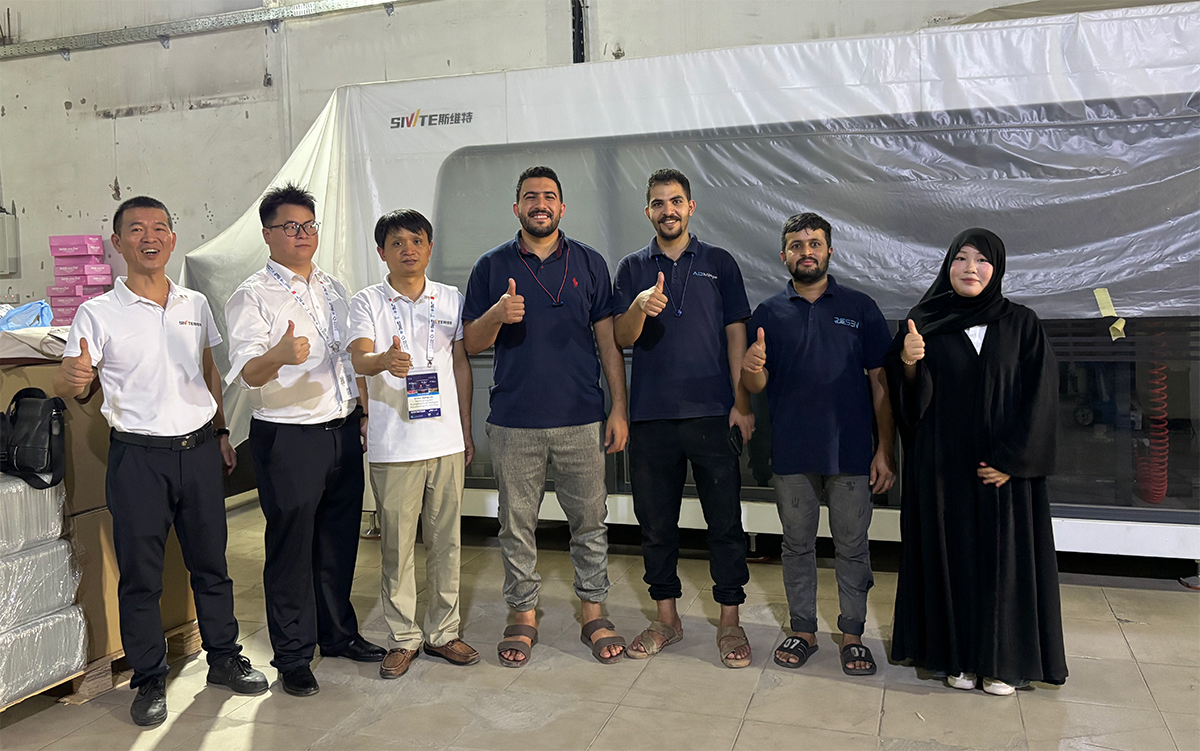
La certification CE et la conformité à la norme ISO 9001 relative au système de gestion de la qualité répondent aux exigences de certification des marques alimentaires saoudiennes qui approvisionnent les marchés d'exportation. L'assistance à l'installation sur site — le fabricant envoie des techniciens dans les locaux du client pour la mise en service et la formation des opérateurs — comble le déficit de compétences auquel sont confrontés les opérateurs novices de machines de thermoformage dans les zones industrielles émergentes d'Arabie saoudite.
Guide de l'acheteur : choisir un fournisseur de machines de thermoformage pour ses activités en Arabie saoudite
1. Vérifier la compatibilité de l'alimentation électrique
La plupart des machines de thermoformage disponibles à l'international sont configurées pour une alimentation triphasée de 380 V, 50 Hz — la norme sur le réseau industriel saoudien. Si vous vous approvisionnez sur des marchés utilisant une alimentation à 60 Hz (Amérique du Nord, Philippines, certaines régions d'Amérique du Sud), vérifiez la configuration du transformateur et de l'onduleur auprès du fabricant avant de passer commande.
2. Adapter la zone de formage à votre gamme de produits
Mesurez votre plus grand récipient en fonction de la disposition des alvéoles du moule, et non en fonction des dimensions individuelles du récipient. La zone de formage de 760 × 650 mm de la SWT-7565 permet d’utiliser aussi bien des moules à alvéoles multiples pour les petits récipients que des moules à alvéole unique pour les grands plateaux de restauration. Pour la production exclusive de gobelets, les dimensions du moule de la TZ-750B (750 × 420 mm) sont spécialement adaptées à cette application.
3. Évaluer la flexibilité des matériaux par rapport à la demande future
Si votre production actuelle utilise uniquement du PP, mais que vous prévoyez d'ajouter du PET pour des emballages de vente au détail haut de gamme ou du PLA pour les marchés d'exportation imposant des exigences en matière de compostabilité, choisissez une machine dont le système de contrôle du chauffage est capable de gérer des plages de température spécifiques à chaque matériau. La régulation indépendante de la température pour chaque brique est la fonctionnalité technique qui permet la production multi-matériaux.
4. Vérifier que les infrastructures des services publics sont prêtes
Les machines de thermoformage industriel nécessitent de l'air comprimé à un débit d'environ 1 200 L/min (0,6–0,8 MPa), de l’eau de refroidissement propre (≤ 0,5 m³, exempte de phosphore, de soufre et de fer), ainsi qu’un espace au sol suffisant dans l’usine — la SWT-7565 nécessite environ 13 m × 7 m, y compris l’espace nécessaire à l’accès de l’opérateur. Vérifiez la disponibilité de ces équipements avant de passer commande afin d’éviter tout retard de mise en service.
5. Évaluer la couverture du service après-vente
La volonté d'un fabricant d'envoyer des techniciens pour l'installation et la formation sur site constitue le seuil minimum. Allez plus loin : renseignez-vous sur les politiques en matière de stock de pièces de rechange, les délais d’intervention pour le dépannage à distance, et vérifiez si le fabricant dispose déjà de partenariats de service avec des agents ou des techniciens dans la région du CCG. Pour un transformateur saoudien opérant à Sudair ou à Jubail — des sites situés à plusieurs heures des grands centres urbains —, la capacité d’intervention du service après-vente a un impact direct sur la continuité de la production.
6. Calculez le coût total de possession, et non le prix d'achat
Une machine de thermoformage a une durée de vie de 10 à 15 ans. Il faut tenir compte de la consommation énergétique réelle (60 à 70% de puissance installée pour les machines à servocommande contre une consommation proche de la puissance nominale pour les systèmes hydrauliques), du coût des temps d’arrêt liés au changement de moule, du taux de rebut dû à un chauffage irrégulier et de la disponibilité des pièces de rechange tout au long de la durée de vie de la machine. Un prix d’achat plus bas qui s’accompagne de coûts d’exploitation plus élevés et d’arrêts de production plus fréquents représente une perte nette pour tout transformateur saoudien pratiquant la production en plusieurs équipes.
Questions fréquemment posées
Quelle est la capacité de production d'une machine de thermoformage destinée à l'emballage alimentaire ?
Le rendement dépend de la cadence de cycle et du nombre de cavités. Un moule à 12 cavités fonctionnant à 40 cycles par minute produit 28 800 barquettes par heure. Un moule à plateaux à emboutissage profond à 4 cavités, fonctionnant à 25 cycles par minute, produit 6 000 plateaux par heure. Le SWT-7565 fonctionne à une cadence comprise entre 5 et 45 cycles par minute, en fonction de la géométrie du produit et du matériau.
Les machines de thermoformage peuvent-elles traiter du PLA biodégradable ?
Oui. Les modèles SWT-7565 et TZ-750B prennent tous deux en charge les feuilles de PLA dans les plages d’épaisseur standard. La plage de formage du PLA (température de surface de la feuille comprise entre 80 et 110 °C) est plus étroite que celle du PP ou du PET, ce qui nécessite un contrôle précis de la température. Les machines dotées d’un système de régulation indépendante du chauffage par brique et d’un refroidissement réactif du moule permettent de maintenir les paramètres de formage du PLA de manière constante.
Combien de temps faut-il pour changer les moules sur une machine de thermoformage à servocommande ?
Grâce à un système de recettes enregistrées, à un positionnement par servocommande et à un montage des moules sur rails coulissants, un changement complet de moule (stations de formage et de poinçonnage) prend entre 15 et 30 minutes. Sans ces fonctionnalités, ce même changement nécessite entre 60 et 90 minutes. Pour les transformateurs produisant plusieurs formats de contenants, la capacité de changement rapide détermine directement le rendement quotidien.
Quelle est la différence entre le formage sous pression positive/négative et le formage sous vide seul ?
Le formage par vide seul utilise la pression atmosphérique (différentiel d’environ 1 bar) pour plaquer la feuille chauffée contre le moule. Le formage par pression positive/négative consiste à injecter de l’air comprimé par le haut de la feuille (généralement entre 5 et 6 bars) tout en appliquant un vide par le bas. La force de formage plus élevée permet d’obtenir des angles plus nets, une épaisseur de paroi plus uniforme et une meilleure reproduction de la surface du moule — des critères essentiels pour les emballages alimentaires, où l’aspect du récipient et la précision dimensionnelle ont une incidence sur les opérations en aval de remplissage et de scellage.
Quelles certifications une machine de thermoformage doit-elle posséder pour le marché saoudien ?
La certification CE atteste de la conformité aux normes européennes en matière de santé, de sécurité et d'environnement ; elle est largement reconnue par les autorités réglementaires saoudiennes et les auditeurs des marques agroalimentaires. La certification ISO 9001 relative au système de gestion de la qualité de l'usine de fabrication apporte une garantie supplémentaire quant à la constance de la qualité de la production. Pour les machines destinées aux transformateurs saoudiens orientés vers l'exportation, la conformité CE est de plus en plus obligatoire.
TZ-Machinery propose-t-elle une assistance à l'installation en Arabie saoudite ?
Oui. Le fabricant envoie un ou deux techniciens sur le site du client pour l'installation, la mise en service et la formation des opérateurs. Le client se charge de préparer les fondations, les raccordements aux réseaux (électricité, eau, air comprimé) et les matières premières, conformément au plan d'installation fourni avant l'expédition.
Quelle alimentation électrique l'Arabie saoudite exige-t-elle pour les machines de thermoformage ?
Le réseau industriel saoudien fonctionne à 380 V, 50 Hz, en triphasé — la configuration standard pour les machines de thermoformage d'origine internationale. La plupart des fabricants peuvent s'adapter à cette configuration sans modification. Vérifiez la tolérance de tension et la configuration des phases auprès du fabricant lors de la définition des spécifications de la commande afin d'éviter tout problème lors de la mise en service.
Quel est le meilleur matériau pour les récipients alimentaires adaptés au micro-ondes ?
Le PP (polypropylène) est la norme en matière de récipients alimentaires adaptés au micro-ondes. Il résiste aux températures de réchauffage au micro-ondes sans se déformer, supporte les processus de remplissage à chaud jusqu’à 100 °C et offre des propriétés de barrière contre l’humidité adéquates. Le CPET (PET cristallisé) est l'alternative pour les applications « double four » nécessitant des températures de cuisson pouvant atteindre 220 °C.
Résumé professionnel
Pour les transformateurs d’emballages opérant dans les six villes industrielles stratégiques d’Arabie saoudite — Riyad, Djeddah, Sudair, Jubail, Dammam et Yanbu —, le choix du meilleur fabricant de machines de thermoformage nécessite d’évaluer les candidats à l’aune d’un ensemble spécifique de critères : la robustesse technique pour une production continue en plusieurs équipes, la flexibilité en matière de matériaux (couvrant le PP, PET, PS et PLA, l’efficacité énergétique des systèmes à servocommande, une architecture électrique certifiée CE, ainsi qu’une capacité avérée en matière de service après-vente dans la région du CCG. Les plateformes SWT-7565 et TZ-750B de TZ-Machinery répondent à ces exigences en offrant une transparence au niveau des composants — chaque élément électrique, pneumatiques et de commande provient de fournisseurs industriels mondiaux de renom — et grâce à des conceptions à servocommande qui réduisent la consommation énergétique réelle en fonctionnement à 60–70% de la puissance nominale installée. Pour les transformateurs saoudiens opérant à Riyad, Djeddah, Sudair, Jubail, Dammam ou Yanbu, le choix se résume à adapter la configuration de la machine à leur gamme de produits, à vérifier la compatibilité avec les réseaux électriques et à sélectionner un fabricant dont l’engagement en matière de service va au-delà de la simple commande.
Demandez des informations dès maintenant — Solutions de thermoformage adaptées à chaque ville en Arabie saoudite : Que votre établissement soit situé à Riyad qui approvisionne le marché de détail et la restauration de la capitale, dans Djeddah ou Yanbu ciblant les marchés d'exportation de la mer Rouge, à Sudair le lancement d'une nouvelle chaîne de production « Vision 2030 », ou dans Jubail ou Dammam Tirez parti des infrastructures industrielles de la Province de l'Est : contactez TZ-Machinery pour obtenir une configuration de machine de thermoformage, un devis et un plan d'installation adaptés à vos besoins de production. Notre équipe d'ingénieurs vous propose des offres techniques détaillées comprenant les caractéristiques techniques des machines, la disposition des cavités des moules, les besoins en raccordements et le calendrier de mise en service sur site pour les sites industriels saoudiens.