

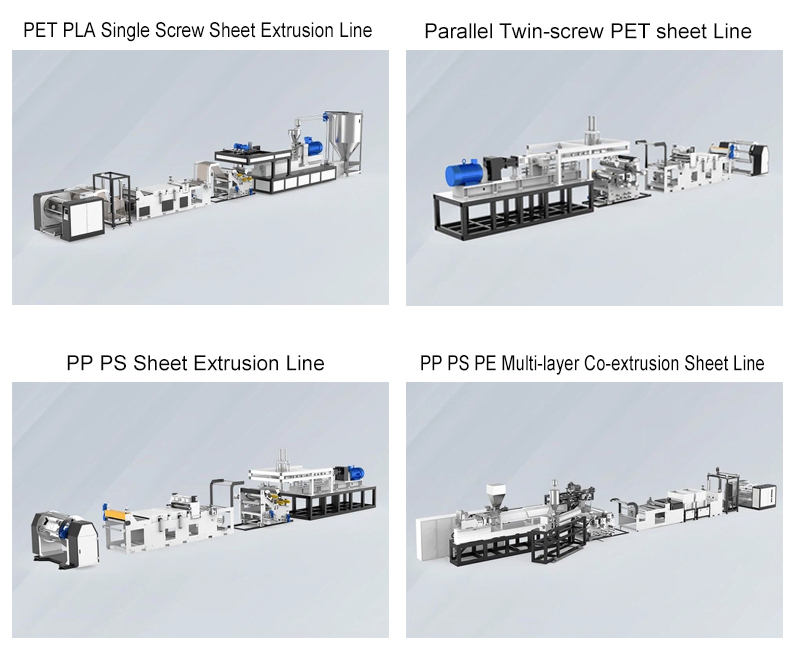
Plastic sheet extrusion is the backbone of many industries including packaging, food service, medical, and construction. As a leading manufacturer of plastic sheet extrusion machines, TZ Machinery specializes in high-performance solutions for PET sheet extrusion, PP/PS/PLA sheet extrusion, and even biodegradable materials like bamboo powder and cornstarch PP. In this blog, we’ll walk you through everything you need to know about plastic sheet extrusion, including the process, materials, key components, and challenges.
What is Plastic Sheet Extrusion?
Plastic sheet extrusion is a continuous manufacturing process that transforms raw thermoplastic materials into flat, consistent plastic sheets. These sheets can later be thermoformed, die-cut, or converted into various packaging and industrial products.
How Does Sheet Extrusion Work?
The process begins by feeding raw plastic pellets or flakes into a plastic sheet extrusion machine. The material is melted in a heated barrel, homogenized, and then pushed through a flat die to form a sheet. The sheet is then cooled and solidified by chill rolls, followed by cutting or rolling as per the desired specifications.
Plastic Sheet Extrusion Process
Feeding – Raw plastic materials enter the extruder hopper.
Melting – Material is melted and mixed by rotating screws.
Extrusion – Molten plastic is shaped through a sheet die.
Cooling – Chill rolls reduce the temperature and set the thickness.
Haul-off & Cutting – The sheet is pulled, trimmed, and rolled or cut into final sizes.
Types of Materials Used in Sheet Extrusion
TZ Machinery supports a wide range of raw materials for sheet extrusion:
PET (Polyethylene Terephthalate) – High clarity, great barrier properties.
PP (Polypropylene) – Lightweight, chemical-resistant, recyclable.
PS (Polystyrene) – Cost-effective, used in food trays and clamshells.
PLA (Polylactic Acid) – Biodegradable, derived from plants.
Bamboo Powder – Eco-friendly filler for sustainable sheets.
Cornstarch-Modified PP – Biodegradable alternative to pure PP.
Advantages of Sheet Extrusion
Continuous, high-volume production
Precise control over thickness and surface finish
Compatible with recycled and biodegradable materials
Customizable width, color, and layer structures
Cost-effective for both short runs and mass production
Key Components in a Sheet Extrusion System
A complete plastic sheet extrusion line typically includes:
Extruder (Single or Multi-screw)
Screen Changer & Melt Pump
Flat T-die
Three-Roll Calender/Chill Rolls
Edge Trimmer and Thickness Gauge
Haul-off and Cutting Unit
Automatic Winder or Stacker
Challenges in Sheet Extrusion
Maintaining uniform sheet thickness
Material degradation during overheating
Roll cooling imbalances
Gel spots or unmelted particles in the final sheet
Proper screw design for specific materials
Optimizing the Sheet Extrusion Process
Use high-quality temperature and pressure control systems
Regular maintenance of screws and die
Optimize die lip design for even flow
Adjust chill roll gap and speed for desired thickness
Integrate servo-driven systems for energy efficiency
Sheet Extrusion in Different Industries
Plastic sheet extrusion is vital in many sectors:
Packaging – PET and PP sheets for thermoformed food trays and containers
Medical – Sterile packaging using PS and PET
Agriculture – Biodegradable PLA or cornstarch PP sheets
Electronics – Conductive and antistatic sheets for components
Green Products – Bamboo powder sheets for disposable tableware

Conclusion
Whether you’re producing traditional plastic sheets or exploring sustainable alternatives, plastic sheet extrusion equipment plays a critical role in your production line. At TZ Machinery, we provide reliable, high-performance plastic sheet extrusion lines for a variety of materials and applications. Let us help you scale your business with our advanced machinery and engineering expertise.