
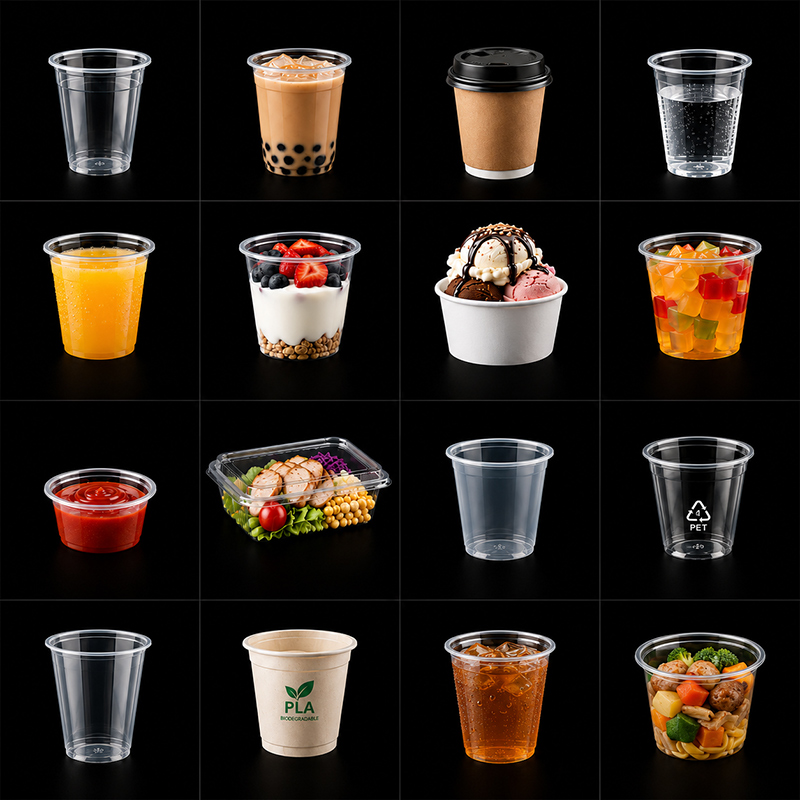
Die Kunststoffverpackungsbranche wird von Jahr zu Jahr wettbewerbsintensiver. Ob Sie PP-Becher, PET-Becher, biologisch abbaubare PLA-Becher, Joghurtbecher, Wasserbecher, Kaffeebecher oder Einweg-Getränkebecher herstellen – die Senkung der Produktionskosten bei gleichzeitiger Verbesserung der Produktqualität ist unerlässlich geworden.
Viele Hersteller ersetzen inzwischen traditionelle hydraulische Becherherstellungsmaschinen durch vollservo-elektrische Becherherstellungsmaschinen, da diese eine höhere Produktionseffizienz, einen geringeren Energieverbrauch und deutlich reduzierte Wartungskosten bieten.
Wenn Sie planen, in eine neue Becherherstellungsmaschine zu investieren, erklärt Ihnen dieser Leitfaden, warum eine vollservo-elektrische Becherherstellungsmaschine weltweit zur bevorzugten Wahl wird.
Was ist eine vollservo-elektrische Becherherstellungsmaschine?
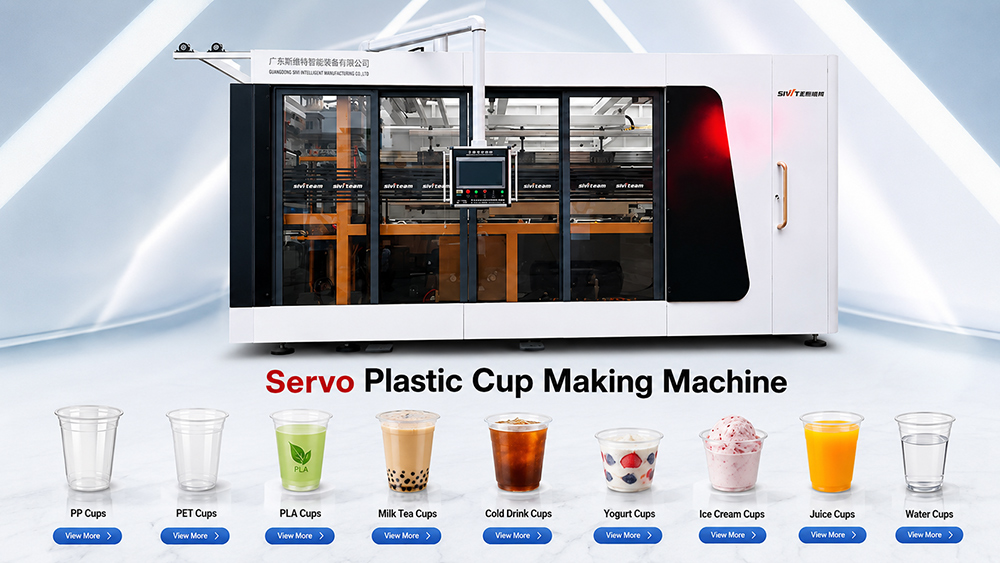
Eine vollservo-elektrische Becherherstellungsmaschine verwendet unabhängige Servomotoren zur Steuerung jeder kritischen Bewegung, einschließlich:
- Folienzuführung
- Heizung
- Bildung von
- Vorstreckhilfe (Plug-Assist)
- Schneiden
- Stapeln
Im Gegensatz zu traditionellen hydraulischen Maschinen eliminieren Servosysteme Hydrauliköl, Pumpen und Druckschwankungen, was zu einer wesentlich höheren Präzision und Effizienz führt.
Diese fortschrittliche Technologie wird häufig zur Herstellung von Folgendem eingesetzt:
- PP-Becher
- PET-Becher
- PLA-Becher
- Milch-Teebecher
- Kaltgetränkebecher
- Joghurtbecher
- Eisbecher
- Safttassen
- Wasserbecher
Vollservo- vs. hydraulische Becherherstellungsmaschine
1. Höhere Produktionsgeschwindigkeit
Die Produktionsgeschwindigkeit bestimmt direkt Ihre tägliche Ausbringungsmenge und Rentabilität.
Hydraulische Maschine
- 20 Zyklen/min
- Hydraulische Bewegungen sind langsamer
- Die Geschwindigkeit schwankt unter starker Last
Vollservo-Maschine
- 28 Umdrehungen pro Minute
- Kontinuierliche Hochgeschwindigkeitsproduktion
- Stabiler Betrieb auch bei langen Produktionsläufen
Ergebnis: Eine vollservo-elektrische Maschine kann die Produktionskapazität um 30-60 % steigern, sodass Hersteller auf derselben Werksfläche mehr Becher produzieren können.
2. Überlegene Formpräzision
Die Gleichmäßigkeit der Becher ist einer der wichtigsten Qualitätsindikatoren.
Hydraulische Maschinen leiden häufig unter:
- Positionsabweichungen
- Unregelmäßigem Bechergewicht
- Ungleichmäßiger Wandstärke
- Problemen mit der Werkzeugausrichtung
Eine vollservo-elektrische Maschine bietet:
- Positioniergenauigkeit von bis zu ±0,02 mm
- Stabilen Formdruck
- Hervorragende Wiederholgenauigkeit
- Geringere Ausschussrate
Bessere Präzision bedeutet:
- Besseres Becher-Aussehen
- Gleichmäßiges Produktgewicht
- Geringeren Rohstoffabfall
3. Energieeinsparung von 20-40 %
Strom ist einer der größten Betriebskostenfaktoren in der Becherproduktion.
Hydraulische Maschine: Die Hydraulikpumpe läuft ununterbrochen, auch wenn keine Umformbewegung erforderlich ist. Dies hat folgende Auswirkungen:
- Konstanter Stromverbrauch
- Hohe Öltemperatur
- Zusätzlicher Kühlbedarf
Vollservomaschine: Servomotoren verbrauchen nur dann Strom, wenn eine Bewegung erforderlich ist. Zu den Vorteilen zählen:
- 20-40% Energieeinsparungen
- Niedrigere Stromrechnungen
- Geringere CO₂-Emissionen
- Verbesserte Effizienz in der Produktion
Bei Fabriken, die rund um die Uhr in Betrieb sind, können sich die Energieeinsparungen über ein Jahr hinweg erheblich summieren.
4. Nahezu wartungsfreier Betrieb
Hydrauliksysteme erfordern eine regelmäßige Wartung, darunter:
- Wechsel des Hydrauliköls
- Wechsel des Ölfilters
- Dichtungswechsel
- Wartung der Pumpe
- Prüfung auf Ölaustritt
Diese Wartungsarbeiten führen sowohl zu höheren Personalkosten als auch zu längeren Maschinenstillstandszeiten.
Bei einer Vollservomaschine wird vollständig auf Hydrauliköl verzichtet. Zu den Vorteilen zählen:
- Kein Hydrauliköl
- Kein Ölaustritt
- Eine sauberere Produktionsumgebung
- Geringerer Wartungsaufwand
- Längere Lebensdauer der Komponenten
Dadurch wird auch das Risiko einer Produktverunreinigung verringert, weshalb Servomaschinen ideal für die Herstellung von Lebensmittelverpackungen sind.
5. Geringerer Geräuschpegel
Die Arbeitsbedingungen in Fabriken gewinnen zunehmend an Bedeutung.
Hydraulikmaschinen arbeiten in der Regel bei 75–85 dB. Die kontinuierlich laufende Hydraulikpumpe verursacht während des gesamten Produktionsprozesses erhebliche Geräusche.
Eine Vollservomaschine arbeitet bei etwa 65 dB. Das ergibt:
- Ruhigere Werkstätten
- Mehr Bedienkomfort
- Reduzierung der Lärmbelastung am Arbeitsplatz
6. Intelligente SPS + vollständige Servosteuerung
Moderne Vollservomaschinen verfügen über eine fortschrittliche SPS-Automatisierung mit folgenden Merkmalen:
- Rezepte mit einem Klick speichern
- Schneller Werkzeugwechsel
- Automatische Parameteranpassung
- Einfache Bedienung
- Höhere Wiederholgenauigkeit
Das Bedienpersonal kann mit minimalem Rüstaufwand schnell zwischen verschiedenen Bechergrößen wechseln. Dies erhöht die Flexibilität in der Produktion und verringert das Risiko von Bedienungsfehlern.
7. Geringere langfristige Betriebskosten
Zwar ist der Anschaffungspreis einer hydraulischen Maschine in der Regel niedriger, doch sind ihre Betriebskosten über die gesamte Lebensdauer hinweg deutlich höher.
Zu den Kosten für Hydraulikmaschinen gehören:
- Höherer Stromverbrauch
- Kosten für Hydrauliköl
- Regelmäßige Wartung
- Längere Maschinenstillstandszeiten
- Höhere Ausschussquote
Eine Vollservomaschine trägt dazu bei, Folgendes zu reduzieren:
- Stromrechnungen
- Wartungskosten
- Personalkosten
- Materialverschwendung
- Reparaturkosten
Das Ergebnis ist eine schnellere Kapitalrendite (ROI).
Vergleichstabelle
| Merkmal | Hydraulische Bechermaschine | Vollautomatische Servo-Bechermaschine |
|---|---|---|
| Produktionsgeschwindigkeit | 20 Zyklen/min | 28 Umdrehungen pro Minute |
| Positionsgenauigkeit | Mäßig | ±0,02 mm |
| Energieverbrauch | Hoch | 20-40% Unterteil |
| Geräuschpegel | 75–85 dB | Etwa 65 dB |
| Hydrauliköl | Erforderlich | Nicht erforderlich |
| Risiko von Ölleckagen | Ja | Nein |
| Wartung | Hoch | Niedrig |
| Produktkonsistenz | Durchschnitt | Ausgezeichnet |
| Automatisierung | Standard | Vollständige SPS + Servo |
| Betriebskosten | Hoch | Niedrig |
| Lebensdauer der Maschine | Kürzer | Länger |
| ROI | Langsamer | Schneller |
Branchen, die am meisten davon profitieren
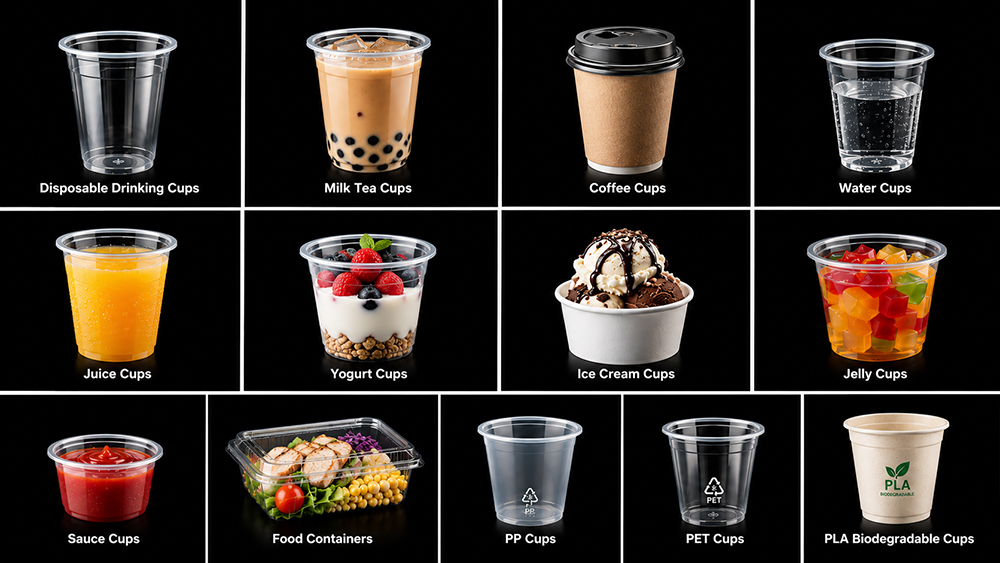
Eine vollautomatische Servo-Kunststoffbecher-Fertigungsmaschine eignet sich ideal für Hersteller, die folgende Produkte herstellen:
- Einweg-Trinkbecher
- Milchteetassen
- Kaffeetassen
- Wasserbecher
- Saftbecher
- Joghurtbecher
- Eisbecher
- Wackelpudding-Förmchen
- Soßenbecher
- Lebensmittelbehälter
- PP-Becher
- PET-Becher
- Biologisch abbaubare PLA-Becher
Ganz gleich, ob Ihr Werk auf die Massenproduktion oder auf hochwertige Verpackungen spezialisiert ist – Servotechnik trägt dazu bei, die Effizienz zu steigern und die Gesamtproduktionskosten zu senken.
Warum immer mehr Hersteller auf Vollservomaschinen umsteigen
Hersteller in Asien, dem Nahen Osten, Afrika, Europa und Südamerika stellen ihre hydraulischen Anlagen um, weil sie Folgendes benötigen:
- Höhere Produktivität
- Geringere Stromkosten
- Bessere Produktkonsistenz
- Umweltfreundlichere Produktion
- Geringere Instandhaltungskosten
- Schnellere Werkzeugwechsel
- Höherer Automatisierungsgrad
- Bessere langfristige Rentabilität
Angesichts stetig steigender Arbeits- und Energiekosten bietet die Vollservotechnik eine nachhaltigere und kostengünstigere Lösung.
Warum TZ Machinery wählen?
Bei TZ Machinery haben wir uns auf die Herstellung moderner, vollservogesteuerter Maschinen zur Herstellung von Kunststoffbechern spezialisiert, die für eine schnelle, energieeffiziente und stabile Produktion ausgelegt sind.
Unsere Maschinen bieten:
- Produktionsgeschwindigkeit bis zu 130 Takte/Minute
- Positioniergenauigkeit von ±0,02 mm
- SPS + intelligente Vollservosteuerung
- Energieeinsparungen von bis zu 40%
- Schnellwechselsystem für Formen
- Zuverlässiger Betrieb für die Produktion rund um die Uhr
- Technischer Support und weltweiter Kundendienst
Ganz gleich, ob Sie ein neues Unternehmen zur Herstellung von Bechern gründen oder Ihre bisherige hydraulische Maschine modernisieren möchten – unser Ingenieurteam kann Ihnen die für Ihre Produktionsanforderungen am besten geeignete Lösung empfehlen.
Häufig gestellte Fragen (FAQ)
Lohnt sich die höhere Anfangsinvestition für eine vollautomatische Servo-Becherherstellungsmaschine?
Ja. Auch wenn der Anschaffungspreis höher ist, führen die Einsparungen bei Strom, Wartung und Personalkosten sowie die geringere Abfallmenge oft zu einer schnelleren Amortisation über die gesamte Lebensdauer der Maschine.
Wie viel Energie kann ich einsparen?
Die meisten Hersteller geben einen um 20–40% geringeren Energieverbrauch an, abhängig von der Bechergröße, der Produktionsgeschwindigkeit und den Betriebsbedingungen.
Können Vollservomaschinen PP-, PET- und PLA-Becher herstellen?
Ja. Moderne, vollservogesteuerte Becherfertigungsmaschinen können mit der entsprechenden Maschinenkonfiguration und den passenden Formen PP-, PET- und PLA-Platten verarbeiten.
Wie hoch ist die typische Produktionsgeschwindigkeit?
Hochleistungs-Vollservomaschinen erreichen in der Regel 28 Zyklen pro Minute, abhängig von der Formkonstruktion und den Produktspezifikationen.
Schlussfolgerung
Wenn es Ihr Ziel ist, hochwertige Kunststoffbecher herzustellen und gleichzeitig die Produktionskosten zu senken, dann ist ein vollautomatische Servo-Plastikbecher-Herstellungsmaschine ist die erste Wahl. Im Vergleich zu herkömmlichen Hydraulikmaschinen bietet sie eine schnellere Produktion, höhere Präzision, einen geringeren Energieverbrauch, einen leiseren Betrieb und minimalen Wartungsaufwand.
Angesichts der steigenden Nachfrage nach einer effizienten und nachhaltigen Fertigung können Investitionen in Vollservotechnologie bereits heute die Produktivität steigern und gleichzeitig die Wettbewerbsfähigkeit Ihres Werks auf lange Sicht stärken.