
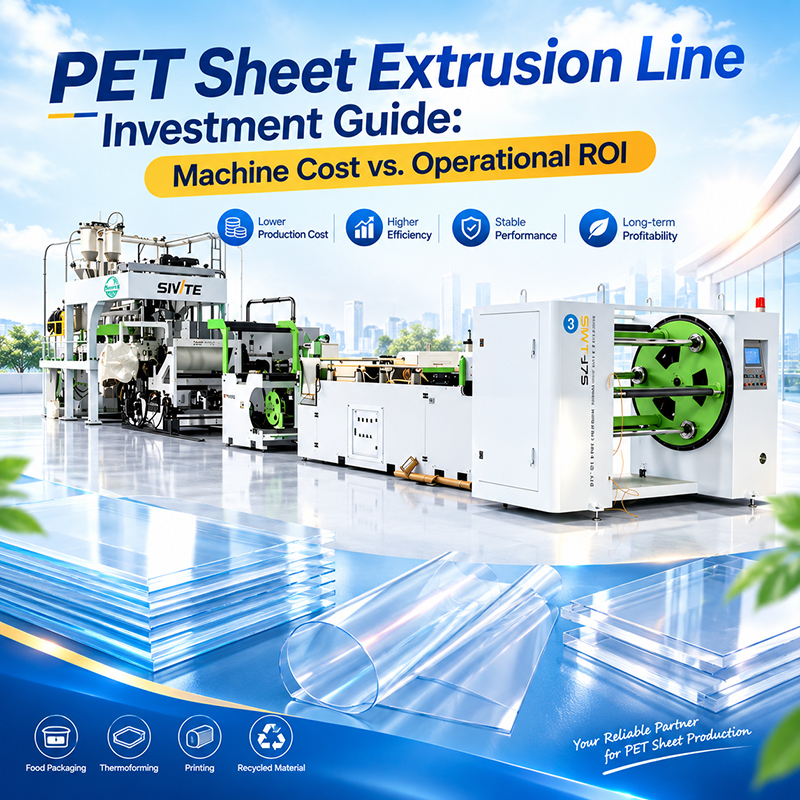
への投資 PETシート押出ライン これは、包装メーカーや熱成形業者にとって重要な設備投資の決定事項です。初期の調達協議では機械の初期価格が主な話題となりますが、購入価格はライフサイクル全体の運用コストのほんの一部に過ぎません。.
収益性の高い製造工場を建設するためには、意思決定者はCapEx(設備投資)とOpEx(運営費)の両方を評価し、PETシート押出機の真のROIを見極める必要があります。.
設備投資(CapEx):PETシート生産ラインの価格を左右する要因とは?
PETシート押出ラインの取得コストは、通常、 $150,000~$1,200,000以上, 、出力容量、構造構成、および技術仕様によって異なります。.
押出機の構成
単軸押出機 初期購入価格が安いのが特徴です。しかし、, 並列同方向回転ツインスクリュー押出機—多段式真空脱ガス装置を搭載しているため—、コストがかかり、エネルギー消費量の多い予備乾燥システムの導入が不要になります。.
生産能力
エントリーレベルのラインは300~500 kg/h、中級クラスの構成は500~800 kg/h、そして大容量の産業用ラインは1,000~1,500 kg/h以上を生産します。 生産量が増加すると、初期の機械コストは上昇しますが、1kgあたりの固定経費は大幅に削減されます。.
多層共押出(A/B/A)
多層システム 専用の共押出機、フィードブロック、およびマルチマニホールドTダイが必要となります。これにより設備投資(CapEx)は増加しますが、食品接触適合基準を満たすために、薄手のバージンPET外層の間に低コストのリサイクルPET(rPET)ボトルフレークを挟み込むことが可能になります。.
精密下流工程装置
高精度な3ロールカレンダースタック、自動厚さ測定装置、アキュムレータバンク、およびマルチステーションワインダーは、シートの透明度、厚さの均一性、そして最終的な投資総額に直接影響を与えます。.
OpExの内訳:PETシート製造の真のコスト
5年から10年間にわたる運用コストは、初期の設備投資(CapEx)をはるかに上回ります。24時間365日稼働する押出成形プラントにおいて、運用コスト(OpEx)は主に以下の3つの要因によって構成されています:
| 費用区分 | 営業費用に占める推定割合 | 業務最適化戦略 |
|---|---|---|
| 原材料 | 60% – 70% | バージンPET樹脂の代わりに、100%の使用済みrPETボトルフレークを加工する。. |
| エネルギー・公益事業 | 15% – 20% | 結晶化乾燥機を、直接式二軸スクリュー真空脱ガス装置に置き換える。. |
| 人件費および間接費 | 10% – 15% | 自動巻き取り機および閉ループ式エッジトリム再供給装置の導入。. |
PETシート押出機のROIを早期に実現する主な要因
回収期間を 12~24か月 以下の3つの重要な生産指標の最適化に依存しています:
フレークの直接加工(rPET)
バージンPET樹脂は、洗浄済みの使用済みPETボトルフレークに比べ、原材料コストが大幅に高くなります。100% rPETフレークを直接処理できるように構成された押出ラインを導入すれば、即座に材料コストの削減効果が得られます。.
無乾燥式二軸押出成形
従来のPET加工では、4~6時間にわたる高温での予備乾燥が必要です。高真空ツインスクリュー押出成形では、溶融物から直接水分を除去できるため、プラント全体の電力消費量を1キログラムあたり最大15~25%削減できます。.
閉ループ式スクラップ回収
統合 インライン式エッジトリム造粒機 生産工程で発生したスクラップを、熱劣化を起こすことなく直接メイン押出機に再投入し、材料の廃棄を最小限に抑えます。.
投資回収期間と年間収益性の算出
期待収益を算出する際は、設備稼働率、原材料の価格差、および1キログラムあたりの電力消費量を評価してください:
年間純利益率 = [年間生産量(kg) × (シート販売価格/kg − 原材料費/kg)] − 年間のエネルギー費および運営費
ROI回収期間(年) = (設備投資総額 + 設置費用) ÷ 年間純営業利益
ROIの計算例: 年間6,000時間稼働し、500 kg/hの生産能力を持つ二軸スクリューラインは、年間3,000 metric tonsのPETシートを生産します。 高品質なrPETボトルフレークをブレンドすることで、原料コストを$0.15/kg削減でき、年間$450,000の原料費削減効果が見込まれ、これにより初期設備投資は1.5~2年で回収できます。.
よくある質問
PETシートの押出ラインの価格はどれくらいですか?
PETシート押出ラインの導入コストは、生産能力、押出機の構成、および後工程設備の精度に応じて、通常$150,000から$1,200,000以上となります。.
PETシート押出機の一般的なROI回収期間はどのくらいですか?
ほとんどのPETシート押出ラインでは、投資回収期間が12~24ヶ月となっています。投資回収期間を短縮するには、rPETフレークの直接加工、ドライフリーのツインスクリュー押出、およびクローズドループ方式によるスクラップ回収が鍵となります。.
PETシート製造において、最大の操業コストは何ですか?
原材料費は営業費用の60~70%を占めています。バージンPET樹脂の代わりに、100%の消費後rPETボトルフレークを加工することは、最も効果的なコスト削減策です。.
二軸押出成形は、どのようにしてエネルギーコストを削減するのでしょうか?
高真空ツインスクリュー押出成形では、溶融物から直接水分を除去するため、4~6時間かかる予備乾燥工程が不要になります。これにより、プラント全体の電力消費量を1キログラムあたり15~25%削減できます。.
再生PETフレークは原材料コストを削減できるか?
はい。100% rPETボトルフレークに対応するように構成された押出ラインは、即座に原材料の削減効果をもたらします。多層A/B/A共押出により、工場ではrPETフレークを薄いバージンPET層で挟み込むことで、食品接触適合性を維持することができます。.
どの生産能力を選べばよいでしょうか?
エントリーレベルのラインは300~500 kg/h、ミドルクラスのラインは500~800 kg/h、産業用ラインは1,000~1,500 kg/h以上を生産します。生産量が増えると初期設備投資(CapEx)は増加しますが、1 kgあたりの固定間接費は低下します。.
初期費用の低さにのみ焦点を当てて PETシート押出成形機のコスト その結果、長期的には光熱費の増加や、樹脂に対する要件の厳格化につながることがよくあります。効率的な脱気、多層共押出、およびrPETの直接加工に投資することで、熱成形包装分野における長期的な収益性と競争優位性を確保できます。.