
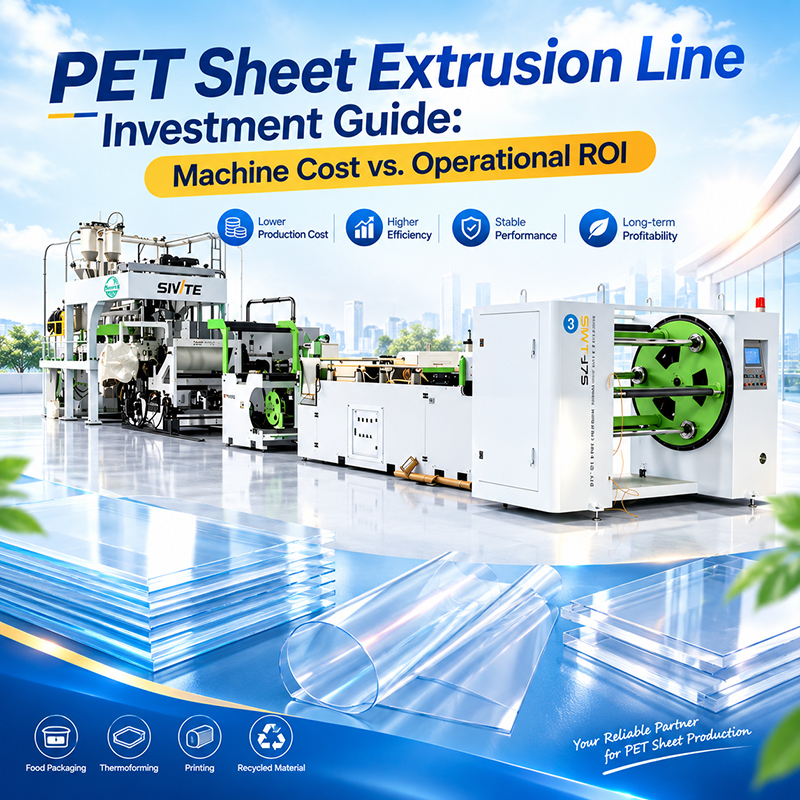
Invertir en un Línea de extrusión de láminas de PET Es una decisión de inversión importante para los fabricantes de envases y las empresas de termoformado. Aunque el precio inicial de la maquinaria es el tema principal en las primeras conversaciones sobre la adquisición, dicho precio representa solo una pequeña parte de los gastos operativos totales a lo largo de todo el ciclo de vida.
Para construir una planta de fabricación rentable, los responsables de la toma de decisiones deben evaluar tanto el CapEx (gasto de capital) como el OpEx (gasto operativo) para determinar el verdadero retorno de la inversión (ROI) de una extrusora de láminas de PET.
CapEx: ¿Qué factores influyen en el precio de una línea de producción de láminas de PET?
El coste de adquisición de una línea de extrusión de láminas de PET suele oscilar entre De $150 000 a más de $1 200 000, en función de la capacidad de producción, las configuraciones estructurales y las especificaciones técnicas.
Configuración de la extrusora
Extrusoras de un solo tornillo tienen un precio de compra inicial más bajo. Sin embargo, extrusoras de doble husillo paralelas y co-rotativas—equipados con un sistema de desgasificación al vacío de varias etapas— eliminan la necesidad de recurrir a sistemas de presecado costosos y que consumen mucha energía.
Capacidad de producción
Las líneas básicas producen entre 300 y 500 kg/h, las configuraciones de gama media alcanzan entre 500 y 800 kg/h, y las líneas industriales de alta capacidad llegan a entre 1.000 y 1.500+ kg/h. Un mayor rendimiento aumenta los costes iniciales de la maquinaria, pero reduce drásticamente los gastos fijos por kilogramo.
Coextrusión multicapa (A/B/A)
Sistemas multicapa requieren coextrusoras específicas, bloques de alimentación y matrices en T con múltiples colectores. Aunque esto aumenta la inversión en maquinaria (CapEx), permite a las plantas intercalar escamas de botellas de PET reciclado (rPET) de bajo coste entre finas capas exteriores de PET virgen, con el fin de cumplir con la normativa sobre contacto con alimentos.
Equipos de precisión para procesos posteriores
Las pilas de calandras de tres rodillos de alta precisión, los medidores automáticos de espesor, los bancos de acumuladores y las bobinadoras de varias estaciones influyen directamente en la transparencia de la lámina, la uniformidad del espesor y los costes totales de inversión.
Desglose de los gastos operativos: el coste real de la fabricación de láminas de PET
Los gastos operativos a lo largo de un periodo de entre 5 y 10 años superan con creces la inversión inicial en maquinaria (CapEx). En una planta de extrusión que funciona de forma continua las 24 horas del día, los 7 días de la semana, los gastos operativos (OpEx) se estructuran en torno a tres factores principales:
| Categoría de costes | Porcentaje estimado de los gastos operativos (OpEx) | Estrategia de optimización operativa |
|---|---|---|
| Materias primas | 60% – 70% | Procesamiento de copos de botellas de rPET posconsumo 100% en lugar de resina de PET virgen. |
| Energía y servicios públicos | 15% – 20% | Sustitución de los secadores por cristalización por un sistema de desgasificación al vacío directo con doble tornillo. |
| Mano de obra y gastos generales | 10% – 15% | Implantación de bobinadoras automáticas y dispositivos de realimentación de recortes de bordes en bucle cerrado. |
Factores clave que favorecen un retorno de la inversión más rápido en las extrusoras de láminas de PET
Lograr un periodo de amortización de De 12 a 24 meses se basa en la optimización de tres indicadores clave de producción:
Procesamiento directo de escamas (rPET)
La resina de PET virgen conlleva unos costes de materia prima considerablemente más elevados que los copos de botellas de PET posconsumo lavadas. Las líneas de extrusión configuradas para procesar directamente copos de rPET 100% permiten un ahorro inmediato de material.
Extrusión de doble hélice sin humedad
El procesamiento tradicional del PET requiere entre 4 y 6 horas de presecado a alta temperatura. La extrusión de doble husillo al alto vacío elimina la humedad directamente de la masa fundida, lo que reduce el consumo energético total de la planta en hasta 15–25% por kilogramo.
Recuperación de residuos en circuito cerrado
Integrado granuladoras en línea con recorte de bordes reintroducir los residuos de producción directamente en la extrusora principal sin que se produzca degradación térmica, minimizando así el desperdicio de material.
Cálculo del periodo de amortización y de la rentabilidad anual
A la hora de calcular la rentabilidad prevista, evalúa la utilización de la capacidad, el margen de las materias primas y el consumo de energía por kilogramo:
Margen neto anual = [Producción anual (kg) × (precio de venta de la lámina/kg − coste de la materia prima/kg)] − Gastos anuales de energía y explotación
Plazo de recuperación de la inversión (años) = (Inversión total en maquinaria + Costes de instalación) ÷ Beneficio operativo neto anual
Ejemplo de cálculo del ROI: Una línea de doble husillo con una producción de 500 kg/h y que funciona 6.000 horas al año produce 3.000 toneladas métricas de láminas de PET al año. Al lograr una reducción del coste de la materia prima de $0,15/kg mediante la mezcla de escamas de botellas de rPET de alta calidad, se obtiene un ahorro anual en materia prima de $450 000, lo que permite amortizar la inversión inicial en la máquina en un plazo de entre 1,5 y 2 años.
Preguntas frecuentes
¿Cuánto cuesta una línea de extrusión de láminas de PET?
El coste de adquisición de una línea de extrusión de láminas de PET suele oscilar entre $150 000 y más de $1 200 000, dependiendo de la capacidad de producción, la configuración de la extrusora y la precisión de los equipos posteriores.
¿Cuál es el plazo habitual de amortización de la inversión (ROI) de una extrusora de láminas de PET?
La mayoría de las líneas de extrusión de láminas de PET alcanzan un periodo de amortización de entre 12 y 24 meses. Para acelerar la amortización, es necesario recurrir al procesamiento directo de escamas de rPET, a la extrusión de doble husillo sin secado y a la recuperación de residuos en circuito cerrado.
¿Cuál es el mayor coste operativo en la producción de láminas de PET?
Las materias primas representan entre el 60 y el 70% de los gastos operativos. El procesamiento de 100% de escamas de botellas de rPET postconsumo, en lugar de resina de PET virgen, es la estrategia más eficaz para reducir costes.
¿Cómo reduce la extrusión de doble husillo los costes energéticos?
La extrusión de doble husillo al alto vacío elimina la humedad directamente de la masa fundida, lo que suprime la fase de presecado de entre 4 y 6 horas. Esto reduce el consumo energético total de la planta entre 15 y 25% por kilogramo.
¿Pueden las escamas de PET reciclado reducir los costes de las materias primas?
Sí. Las líneas de extrusión configuradas para trabajar con escamas de botella de rPET 100% permiten un ahorro inmediato de material. La coextrusión multicapa A/B/A permite a las plantas intercalar escamas de rPET entre finas capas de PET virgen para garantizar el cumplimiento de la normativa sobre contacto con alimentos.
¿Qué capacidad de producción debería elegir?
Las líneas básicas producen entre 300 y 500 kg/h, las de gama media, entre 500 y 800 kg/h, y las industriales alcanzan entre 1.000 y 1.500+ kg/h. Una mayor producción aumenta la inversión inicial (CapEx), pero reduce los gastos fijos por kilogramo.
Centrándonos exclusivamente en los costes iniciales bajos Coste de una máquina de extrusión de láminas de PET a menudo conlleva un aumento de las facturas de servicios públicos a largo plazo y requisitos más estrictos en cuanto a la resina. Invertir en procesos eficientes de desgasificación, coextrusión multicapa y procesamiento directo de rPET garantiza la rentabilidad a largo plazo y una ventaja competitiva en el sector de los envases termoformados.