
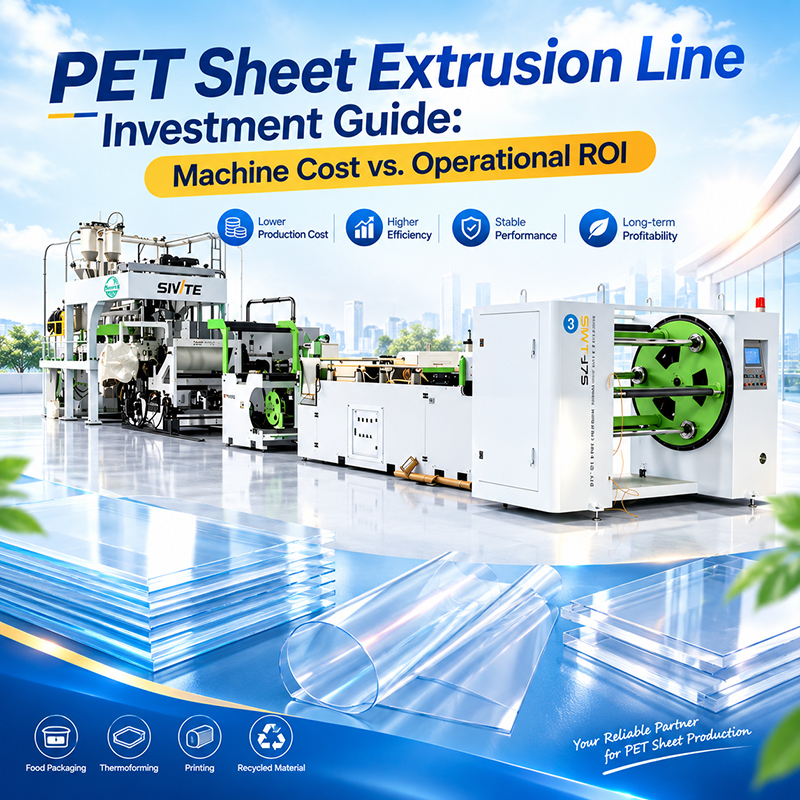
การลงทุนใน สายการผลิตแผ่น PET แบบอัดรีด เป็นการตัดสินใจลงทุนที่สำคัญสำหรับผู้ผลิตบรรจุภัณฑ์และผู้ผลิตผลิตภัณฑ์ด้วยวิธีเทอร์โมฟอร์ม แม้ราคาเครื่องจักรถัดแรกจะเป็นประเด็นหลักในการหารือเรื่องการซื้อในขั้นต้น แต่ราคาซื้อนั้นเป็นเพียงส่วนเล็กของค่าใช้จ่ายการดำเนินงานตลอดวงจรชีวิตทั้งหมด.
เพื่อสร้างโรงงานผลิตที่มีกำไร ผู้ตัดสินใจต้องประเมินทั้ง CapEx (ค่าใช้จ่ายทุน) และ OpEx (ค่าใช้จ่ายดำเนินงาน) เพื่อกำหนดผลตอบแทนจากการลงทุน (ROI) ที่แท้จริงของเครื่องอัดรีดแผ่น PET.
CapEx: ปัจจัยใดที่ส่งผลต่อราคาสายการผลิตแผ่น PET?
ราคาซื้อสายการผลิตแผ่น PET แบบเอ็กซ์ทรูชันโดยทั่วไปอยู่ในช่วงตั้งแต่ $150,000 ถึงมากกว่า $1,200,000, ขึ้นอยู่กับกำลังการผลิต รูปแบบโครงสร้าง และข้อกำหนดทางเทคนิค.
การตั้งค่าเครื่องอัดรีด
เครื่องอัดรีดแบบสกรูเดียว มีราคาซื้อเริ่มต้นที่ต่ำกว่า อย่างไรก็ตาม, เครื่องอัดรีดแบบสกรูคู่ที่หมุนพร้อมกันในทิศทางเดียวกัน—มาพร้อมระบบกำจัดก๊าซด้วยสุญญากาศหลายขั้นตอน—ทำให้ไม่จำเป็นต้องใช้ระบบการอบแห้งล่วงหน้าที่มีค่าใช้จ่ายสูงและใช้พลังงานมาก.
กำลังการผลิต
สายการผลิตระดับเริ่มต้นมีกำลังการผลิต 300–500 กก./ชั่วโมง สายการผลิตระดับกลางมีกำลังการผลิต 500–800 กก./ชั่วโมง ส่วนสายการผลิตอุตสาหกรรมกำลังสูงมีกำลังการผลิตถึง 1,000–1,500+ กก./ชั่วโมง การผลิตที่มีปริมาณสูงขึ้นจะทำให้ต้นทุนเครื่องจักรเริ่มต้นเพิ่มขึ้น แต่จะลดค่าใช้จ่ายคงที่ต่อกิโลกรัมลงอย่างมาก.
การอัดร่วมหลายชั้น (A/B/A)
ระบบหลายชั้น จำเป็นต้องใช้เครื่องอัดร่วมแบบเฉพาะ, บล็อกป้อนวัตถุดิบ และแม่พิมพ์ T แบบหลายท่อร่วม แม้สิ่งนี้จะทำให้ค่าใช้จ่ายในการลงทุนด้านเครื่องจักร (CapEx) เพิ่มขึ้น แต่ช่วยให้โรงงานสามารถวางเกล็ดขวด PET รีไซเคิล (rPET) ราคาต่ำไว้ระหว่างชั้นนอก PET บริสุทธิ์ที่บาง เพื่อให้เป็นไปตามข้อกำหนดในการสัมผัสอาหาร.
อุปกรณ์ปลายสายการผลิตที่มีความแม่นยำสูง
ชุดเครื่องคาเลนเดอร์ 3 ลูกกลิ้งความแม่นยำสูง เครื่องวัดความหนาอัตโนมัติ ชุดเครื่องสะสม และเครื่องม้วนหลายสถานี มีผลกระทบโดยตรงต่อความใสของแผ่น ความสม่ำเสมอของความหนา และค่าใช้จ่ายรวมสุดท้าย.
การวิเคราะห์ค่าใช้จ่ายดำเนินงาน (OpEx): ต้นทุนจริงในการผลิตแผ่น PET
ค่าใช้จ่ายในการดำเนินงานในช่วงเวลา 5 ถึง 10 ปี มีมูลค่าสูงกว่าค่าใช้จ่ายในการลงทุน (CapEx) สำหรับเครื่องจักรในขั้นต้นอย่างมาก ในโรงงานผลิตด้วยกระบวนการอัดรีดที่ทำงานต่อเนื่อง 24 ชั่วโมงทุกวัน ค่าใช้จ่ายในการดำเนินงาน (OpEx) แบ่งออกเป็นสามปัจจัยหลัก ได้แก่:
| ประเภทค่าใช้จ่าย | สัดส่วนค่าใช้จ่ายดำเนินงาน (OpEx) ที่คาดการณ์ | กลยุทธ์การปรับปรุงประสิทธิภาพการดำเนินงาน |
|---|---|---|
| วัตถุดิบ | 60% – 70% | การแปรรูปชิ้นขวด rPET ที่ใช้แล้ว (100%) แทนที่จะใช้เรซิน PET ใหม่. |
| พลังงานและบริการสาธารณูปโภค | 15% – 20% | การเปลี่ยนเครื่องอบแห้งแบบตกผลึกเป็นระบบกำจัดก๊าซด้วยสุญญากาศแบบสกรูคู่โดยตรง. |
| ค่าแรงและค่าใช้จ่ายทั่วไป | 10% – 15% | การติดตั้งเครื่องม้วนอัตโนมัติและเครื่องป้อนกลับขอบแบบวงจรปิด. |
ปัจจัยหลักที่ช่วยเพิ่มผลตอบแทนจากการลงทุน (ROI) ได้เร็วขึ้นในเครื่องอัดรีดแผ่น PET
การบรรลุระยะเวลาคืนทุนที่ 12 ถึง 24 เดือน ขึ้นอยู่กับการปรับปรุงประสิทธิภาพของตัวชี้วัดการผลิตสำคัญสามประการ:
กระบวนการแปรรูปแผ่นโดยตรง (rPET)
ต้นทุนวัตถุดิบของเรซิน PET บริสุทธิ์สูงกว่าอย่างมีนัยสำคัญเมื่อเทียบกับเศษขวด PET ที่ใช้แล้วและผ่านการล้างแล้ว สายการผลิตแบบเอ็กซ์ทรูชันที่ได้รับการปรับแต่งเพื่อแปรรูปเศษ rPET 100% โดยตรง จะช่วยประหยัดต้นทุนวัตถุดิบได้ทันที.
กระบวนการอัดรีดแบบสกรูคู่แบบไม่แห้ง
กระบวนการผลิต PET แบบดั้งเดิมต้องใช้เวลา 4–6 ชั่วโมงในการอบแห้งเบื้องต้นที่อุณหภูมิสูง ส่วนกระบวนการอัดรีดแบบสกรูคู่ในสภาวะสุญญากาศสูงจะช่วยกำจัดความชื้นออกจากวัสดุที่หลอมเหลวโดยตรง ซึ่งช่วยลดการบริโภคพลังงานของโรงงานโดยรวมได้ถึง 15–25% ต่อกิโลกรัม.
ระบบการนำเศษวัสดุกลับมาใช้ใหม่แบบวงจรปิด
บูรณาการ เครื่องบดแบบในสายการผลิตพร้อมระบบตัดขอบ นำเศษวัสดุจากการผลิตกลับเข้าสู่เครื่องอัดรีดหลักโดยตรงโดยไม่ทำให้วัสดุเสื่อมสภาพทางความร้อน ซึ่งช่วยลดการสูญเสียวัสดุให้น้อยที่สุด.
การคำนวณระยะเวลาคืนทุนและอัตราผลตอบแทนประจำปี
เมื่อคำนวณผลตอบแทนที่คาดการณ์ ให้ประเมินระดับการใช้งานกำลังการผลิต ความแตกต่างของราคาวัตถุดิบ และปริมาณการใช้ไฟฟ้าต่อกิโลกรัม:
อัตรากำไรสุทธิประจำปี = [ปริมาณการผลิตประจำปี (กก.) × (ราคาขายต่อแผ่น/กก. − ราคาวัตถุดิบ/กก.)] − ค่าใช้จ่ายด้านพลังงานและค่าใช้จ่ายในการดำเนินงานประจำปี
ระยะเวลาคืนทุน (ปี) = (ค่าใช้จ่ายลงทุนในเครื่องจักรทั้งหมด + ค่าใช้จ่ายติดตั้ง) ÷ กำไรจากการดำเนินงานสุทธิประจำปี
ตัวอย่างการคำนวณ ROI: สายการผลิตแบบสกรูคู่ที่มีกำลังการผลิต 500 กก./ชั่วโมง และทำงาน 6,000 ชั่วโมงต่อปี จะผลิตแผ่น PET ได้ 3,000 เมตริกตันต่อปี การลดต้นทุนวัตถุดิบลง $0.15/kg โดยการผสมเกล็ดขวด rPET คุณภาพสูง จะช่วยประหยัดต้นทุนวัตถุดิบได้ $450,000 ต่อปี — ทำให้การลงทุนในเครื่องจักรคืนทุนได้ภายใน 1.5 ถึง 2 ปี.
คำถามที่พบบ่อย
ราคาสายการผลิตแผ่น PET แบบเอ็กซ์ทรูชันอยู่ที่เท่าไร?
ค่าใช้จ่ายในการซื้อสายการผลิตแผ่น PET แบบเอ็กซ์ทรูชัน โดยทั่วไปมีช่วงราคาตั้งแต่ $150,000 ไปจนถึงมากกว่า $1,200,000 ขึ้นอยู่กับกำลังการผลิต การจัดตั้งเครื่องเอ็กซ์ทรูเดอร์ และความแม่นยำของอุปกรณ์ในขั้นตอนต่อไป.
ระยะเวลาคืนทุน (ROI) ที่ทั่วไปของเครื่องอัดรีดแผ่น PET คือเท่าใด?
สายการผลิตแผ่น PET ส่วนใหญ่มีระยะเวลาคืนทุนระหว่าง 12 ถึง 24 เดือน การคืนทุนที่เร็วขึ้นขึ้นอยู่กับการแปรรูปเศษ rPET แบบตรง การอัดรีดแบบสกรูคู่แบบแห้ง และการนำเศษวัสดุกลับมาใช้ใหม่ในระบบปิด.
ค่าใช้จ่ายในการดำเนินงานที่ใหญ่ที่สุดในการผลิตแผ่น PET คืออะไร?
วัตถุดิบคิดเป็น 60–70% ของค่าใช้จ่ายในการดำเนินงาน การนำเศษขวด rPET ที่ผ่านการใช้งานแล้ว 100% มาแปรรูปแทนการใช้เรซิน PET ใหม่ ถือเป็นกลยุทธ์ลดต้นทุนที่มีประสิทธิภาพสูงสุด.
กระบวนการอัดรีดแบบสกรูคู่ช่วยลดค่าใช้จ่ายด้านพลังงานได้อย่างไร?
กระบวนการอัดรีดแบบสกรูคู่ในสภาวะสุญญากาศสูงช่วยกำจัดความชื้นออกจากวัสดุหลอมเหลวโดยตรง ทำให้ไม่ต้องผ่านขั้นตอนการอบแห้งล่วงหน้าที่ใช้เวลา 4–6 ชั่วโมง ซึ่งช่วยลดการบริโภคพลังงานของโรงงานโดยรวมลงได้ 15–25% ต่อกิโลกรัม.
ชิ้น PET ที่รีไซเคิลสามารถช่วยลดต้นทุนวัตถุดิบได้หรือไม่?
ใช่ครับ สายการผลิตแบบเอ็กซ์ทรูชันที่ได้รับการปรับแต่งให้ใช้ชิ้นรPET 100% สามารถช่วยประหยัดวัสดุได้ทันที การผลิตแบบร่วมเอ็กซ์ทรูชันหลายชั้น A/B/A ช่วยให้โรงงานสามารถวางชิ้นรPET ไว้ระหว่างชั้น PET บริสุทธิ์ที่บาง เพื่อรักษาความสอดคล้องกับมาตรฐานการสัมผัสอาหาร.
ผมควรเลือกกำลังการผลิตเท่าใดดี?
สายการผลิตระดับเริ่มต้นมีกำลังการผลิต 300–500 กก./ชั่วโมง สายการผลิตระดับกลางมีกำลังการผลิต 500–800 กก./ชั่วโมง และสายการผลิตระดับอุตสาหกรรมมีกำลังการผลิต 1,000–1,500+ กก./ชั่วโมง การเพิ่มกำลังการผลิตจะทำให้ค่าใช้จ่ายลงทุนเริ่มต้น (CapEx) สูงขึ้น แต่จะลดค่าใช้จ่ายคงที่ต่อกิโลกรัมลง.
เน้นเฉพาะต้นทุนเริ่มต้นที่ต่ำ ราคาเครื่องอัดรีดแผ่น PET มักส่งผลให้ค่าไฟฟ้าและค่าน้ำในระยะยาวสูงขึ้น และข้อกำหนดเกี่ยวกับเรซินก็เข้มงวดขึ้น การลงทุนในระบบกำจัดก๊าซที่มีประสิทธิภาพ การอัดรีดร่วมหลายชั้น และการแปรรูป rPET แบบตรง จะช่วยรับประกันความสามารถในการทำกำไรในระยะยาว และสร้างความได้เปรียบทางการแข่งขันในด้านการผลิตบรรจุภัณฑ์แบบเทอร์โมฟอร์มมิ่ง.