
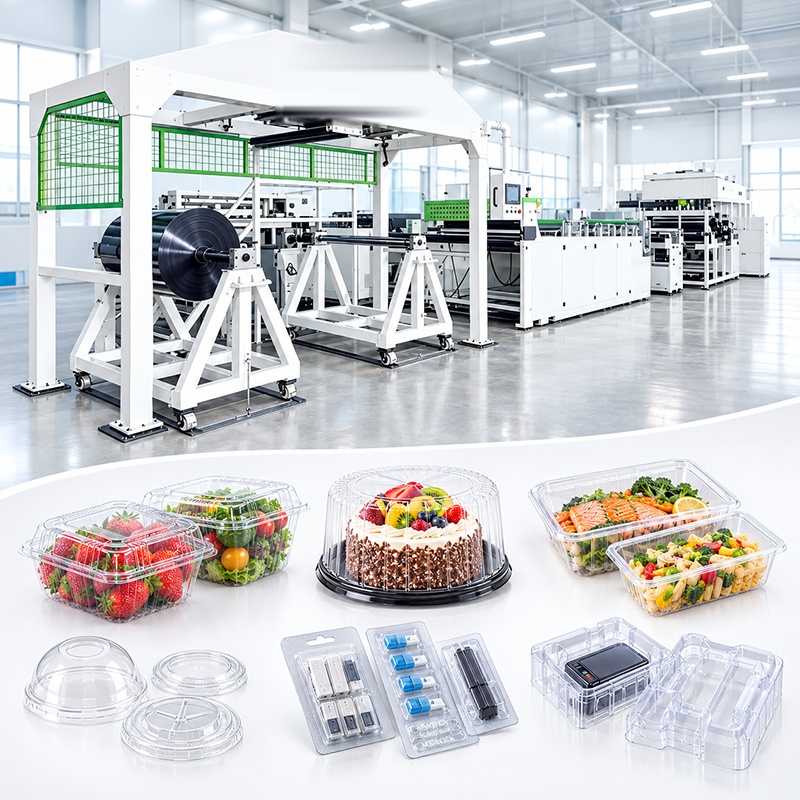
Ngành công nghiệp ép nhiệt và đóng gói hiện đại đòi hỏi độ trong suốt cao, độ cứng vững và chi phí sản xuất thấp hơn. Để đạt được cả ba tiêu chí này trên máy đùn một lớp, thông thường phải sử dụng nhựa PET nguyên sinh 100%. Dây chuyền sản xuất tấm PET ba lớp đồng đùn ABA của TZ-machinery giải quyết vấn đề này: cấu trúc sandwich ABA cho phép các nhà sản xuất tối đa hóa tỷ lệ nguyên liệu tái chế mà không phải hy sinh độ hoàn thiện bề mặt hay tuân thủ tiêu chuẩn an toàn thực phẩm.
1. Cấu trúc đồng đùn ABA là gì?
Trong hệ thống đồng đùn ba lớp ABA, hai máy đùn chia tấm thành ba lớp riêng biệt:
- Lớp A (bề mặt bên ngoài): các lớp màng mỏng, có độ trong suốt cao, được làm từ PET nguyên chất hoặc các chất phụ gia chức năng.
- Lớp B (lõi): một lõi bên trong dày – chiếm tới 70%-80% tổng độ dày tấm – được làm từ PET tái chế (rPET), mảnh chai nhựa hoặc nguyên liệu tái chế công nghiệp.
Chất polymer có giá thành thấp hơn hoặc được tái chế được bao bọc giữa hai lớp vỏ ngoài làm từ nguyên liệu nguyên sinh, nhờ đó tấm vật liệu vẫn giữ được vẻ ngoài nguyên vẹn và khả năng hàn kín mịn màng, trong khi chi phí nguyên liệu nhựa giảm đáng kể. Nếu nguyên liệu đầu vào của bạn chủ yếu là mảnh nhựa tái chế, hãy tham khảo Máy đùn PET nào phù hợp với PET tái chế? để áp dụng logic lựa chọn rộng hơn.
2. Những ưu điểm chính của dây chuyền sản xuất ABA PET của TZ-machinery
Tiết kiệm đáng kể chi phí nguyên liệu thô
Việc đưa mảnh vụn rPET hoặc phế liệu nhà máy vào máy đùn lớp B chính giúp cắt giảm đáng kể chi phí nguyên liệu thô. Các lớp A mỏng có tác dụng bảo vệ lõi, che giấu sự chênh lệch màu sắc và những khuyết điểm nhỏ vốn có của nhựa tái chế. Nhựa nguyên liệu là chi phí biến đổi lớn nhất trong sản xuất tấm nhựa, do đó đây chính là nguồn mang lại lợi ích kinh tế – mô hình chi tiết được trình bày trong tài liệu của chúng tôi Hướng dẫn đầu tư và tỷ suất hoàn vốn (ROI) cho dây chuyền đùn tấm PET.
Độ bền kéo vượt trội và độ cứng kết cấu cao
Tấm đồng đùn có độ bền va đập và khả năng chống rách cao hơn so với tấm một lớp. Việc liên kết ba lớp trong điều kiện nhiệt độ được kiểm soát mang lại độ ổn định cơ học cao, yếu tố quan trọng đối với các khay được gia công nhiệt và kéo sâu dùng cho các ứng dụng nặng.
Tuân thủ các quy định về tiếp xúc với thực phẩm và độ trong suốt cao
Đối với bao bì thực phẩm, khay đựng trái cây và bao bì vỉ, cả tính an toàn lẫn hình thức đều là những yếu tố không thể thỏa hiệp. Các lớp ngoài làm từ PET nguyên chất đóng vai trò như một lớp rào cản sạch, đảm bảo tấm bao bì an toàn cho thực phẩm đồng thời duy trì độ trong suốt như pha lê mà người mua mong đợi từ APET và PETG.
Kiểm soát nhiệt độ và quá trình nóng chảy chính xác
Hệ thống định lượng bơm vật liệu nóng chảy tiên tiến, đầu khuôn tự động và hệ thống kiểm soát nhiệt độ đa vùng giúp duy trì độ dày đồng đều trên toàn bộ chiều rộng tấm. Việc kiểm soát độ dày ổn định giúp giảm thiểu tỷ lệ sản phẩm bị loại trong quá trình ép nhiệt ở các công đoạn tiếp theo.
3. Các thông số kỹ thuật chính
| Tính năng | Thông số kỹ thuật |
|---|---|
| Vật liệu đã qua chế biến | APET, PETG, rPET (mảnh PET tái chế) |
| Cấu trúc lớp | ABA (lớp bề mặt / lõi tái chế / lớp bề mặt) |
| Cấu hình máy đùn | Đầu đùn chính (lõi B) + đầu đùn phụ (lớp A) |
| Phạm vi đầu ra | Từ 300 kg/giờ đến hơn 1.000 kg/giờ (tùy thuộc vào mẫu máy) |
| Độ dày tấm | 0,15 mm – 1,8 mm |
| Ứng dụng | Hộp dạng vỏ sò ép nhiệt, khay đựng thực phẩm, bao bì vỉ, hộp gấp |
4. Các ứng dụng chính
- Bao bì thực phẩm: hộp có nắp gập trong suốt, nắp đậy đồ uống lạnh, khay bánh mì và khay đựng rau củ quả.
- Bao bì công nghiệp và y tế: túi đựng dụng cụ chịu lực cao, khay đựng linh kiện điện tử và vỏ bảo vệ dạng nắp gập.
- Loại hộp dùng để in và gấp: Tấm PET có độ trong suốt cao dùng cho hộp giấy gấp và các sản phẩm văn phòng phẩm trong suốt.
5. Các câu hỏi thường gặp
Một dây chuyền ABA có thể xử lý được bao nhiêu PET tái chế?
Lõi lớp B có thể đạt độ dày tổng thể của tấm từ 70% đến 80%, do đó phần lớn thể tích của tấm có thể là mảnh rPET, mảnh chai hoặc nguyên liệu tái chế nội bộ, trong khi các lớp vỏ A nguyên chất vẫn giữ được độ mỏng.
Lõi rPET có hàm lượng cao liệu có vẫn đáp ứng các quy định về tiếp xúc với thực phẩm không?
Đúng vậy. Tính an toàn thực phẩm phụ thuộc vào bề mặt, chứ không phải phần lõi. Các lớp A làm từ PET nguyên sinh tạo thành lớp rào cản tiếp xúc, do đó tấm nhựa vẫn đảm bảo an toàn thực phẩm ngay cả khi có tỷ lệ vật liệu tái chế cao bên trong.
Dây chuyền này có thể xử lý các sản phẩm có độ dày và công suất như thế nào?
Tấm có độ dày từ 0,15 mm đến 1,8 mm, với công suất từ 300 kg/h đến hơn 1.000 kg/h, tùy thuộc vào mẫu máy và cấu hình trục vít.
Dây chuyền ABA có tốt hơn dây chuyền một lớp không?
Về chi phí, đúng vậy: nhựa là khoản chi phí biến đổi lớn nhất, và dây chuyền ABA thay thế phần lớn chi phí này bằng nguyên liệu tái chế. Về hiệu suất, tấm đồng ép cũng vượt trội hơn tấm một lớp về độ bền va đập và khả năng chống rách.
Máy này có thể gia công những loại vật liệu nào?
Vảy APET, PETG và rPET. Máy đùn lớp A cũng có thể xử lý các chất phụ gia chức năng như bột màu tổng hợp hoặc chất chống dính.
Nâng cấp khả năng đùn ép của bạn
Dây chuyền sản xuất tấm đồng ép ABA PET mang lại lợi thế chi phí trực tiếp cho các nhà sản xuất quy mô lớn: chi phí nhựa thấp hơn trên mỗi kilogam mà không làm giảm độ trong suốt hay tính toàn vẹn cấu trúc, từ đó rút ngắn thời gian hoàn vốn. Xem lại Dây chuyền đùn đồng thời tấm ba lớp ABA PET thông số kỹ thuật, hoặc so sánh cấu hình đang hoạt động trong Dây chuyền sản xuất tấm PET ba lớp ABA công suất 800 kg/giờ Trường hợp này. Vui lòng cung cấp thông số đầu ra mong muốn, chiều rộng tấm và tỷ lệ thành phần tái chế để nhận được cấu hình dây chuyền sản xuất phù hợp và báo giá.