
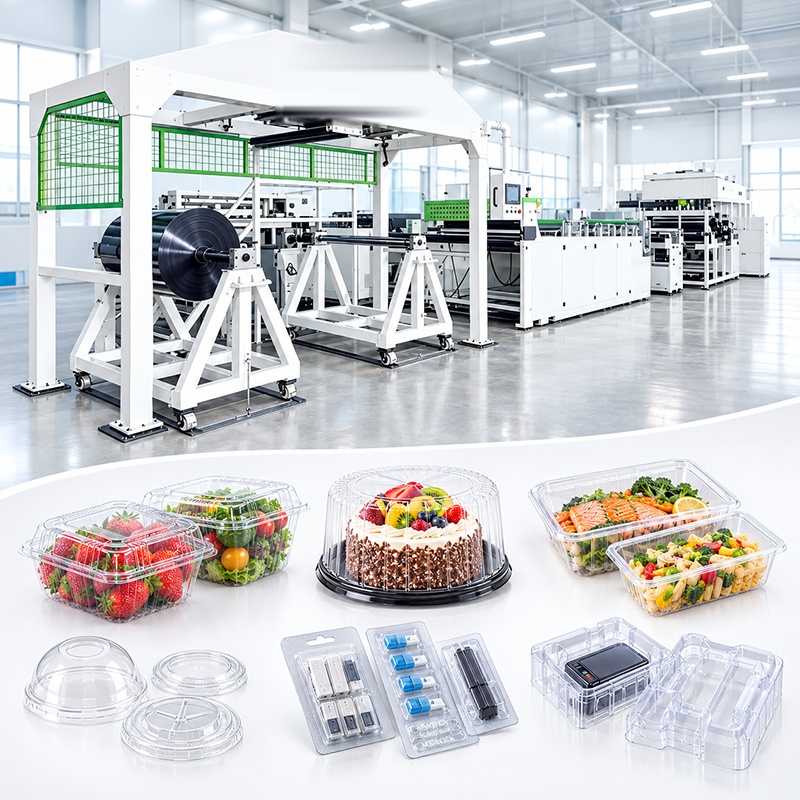
Современная отрасль термоформования и упаковки предъявляет высокие требования к прозрачности, прочности и снижению производственных затрат. Достижение всех трёх показателей на однослойном экструдере обычно означает необходимость приобретать первичный ПЭТ-полимер 100%. Линия по производству трёхслойных соэкструдированных листов ABA PET от TZ-machinery решает эту проблему: многослойная структура ABA позволяет производителям максимально увеличить долю вторичного сырья без ущерба для качества поверхности или соответствия пищевым стандартам.
1. Что такое коэкструзионная структура ABA?
В трёхслойной системе соэкструзии ABA два экструдера разделяют лист на три отдельных слоя:
- Слой A (наружные поверхности): тонкие пленки высокой прозрачности, изготовленные из первичного ПЭТ или с добавлением функциональных добавок.
- Слой B (сердечник): толстый внутренний слой — до 70%-80% от общей толщины листа — в состав которого входит переработанный ПЭТ (rPET), бутылочная стружка или промышленный шрот.
Более дешёвый или переработанный полимер заключается между двумя внешними слоями из первичного сырья, благодаря чему лист сохраняет безупречный внешний вид и обеспечивает ровную герметизацию, при этом себестоимость смолы значительно снижается. Если ваше сырьё в основном состоит из переработанных чешуек, см. Какая экструзионная машина для ПЭТ подходит для переработанного ПЭТ? для более широкой логики выбора.
2. Основные преимущества линии ABA PET от TZ-machinery
Значительная экономия затрат на сырье
Подача чешуек rPET или заводских отходов в экструдер для производства первичного слоя B позволяет существенно сократить затраты на сырье. Тонкие слои A защищают сердцевину, скрывая различия в цвете и незначительные дефекты, присущие переработанному пластику. Смола является самой значительной переменной статьёй затрат при производстве листов, поэтому именно здесь и заключается окупаемость — полная модель изложена в нашем Руководство по инвестициям в линии экструзии ПЭТ-листов и окупаемости инвестиций.
Превосходная прочность на разрыв и конструктивная жесткость
Коэкструдированный лист обладает более высокой ударной вязкостью и сопротивлением разрыву, чем однослойный лист. Склеивание трёх слоёв в контролируемых температурных условиях обеспечивает высокую механическую прочность, что имеет важное значение для изготовления лотков, предназначенных для термоформования и глубокой вытяжки в условиях интенсивной эксплуатации.
Соответствие требованиям к материалам, контактирующим с пищевыми продуктами, и высокая прозрачность
В случае упаковки для пищевых продуктов, лотков для фруктов и блистерной упаковки безопасность и внешний вид являются обязательными требованиями. Наружные слои из первичного ПЭТ служат надежным барьером, обеспечивая безопасность листа для пищевых продуктов и сохраняя кристально чистую прозрачность, которую покупатели ожидают от APET и ПЭТГ.
Точный контроль температуры и состояния расплава
Усовершенствованная система дозирования расплава, автоматические формовочные головки и многозонный контроль температуры обеспечивают равномерную толщину по всей ширине листа. Стабильный контроль толщины позволяет свести к минимуму количество брака на последующих этапах термоформования.
3. Основные технические характеристики
| Характеристика | Технические характеристики |
|---|---|
| Обработанные материалы | APET, PETG, rPET (переработанная ПЭТ-стружка) |
| Структура слоев | ABA (поверхность / переработанный сердечник / поверхность) |
| Конфигурация экструдера | Основной экструдер (сердечник B) + боковой экструдер (слои A) |
| Диапазон выходных значений | От 300 кг/ч до 1 000+ кг/ч (в зависимости от модели) |
| Толщина листа | 0,15 мм – 1,8 мм |
| Приложения | Термоформованные упаковки типа «кламшелл», поддоны для пищевых продуктов, блистерная упаковка, складные коробки |
4. Основные области применения
- Упаковка продуктов питания: прозрачные контейнеры с откидными крышками, крышки для холодных напитков, противни для выпечки и лотки для овощей и фруктов.
- Промышленная и медицинская упаковка: блистерные упаковки для инструментов повышенной прочности, лотки для электронных компонентов и защитные упаковки типа «кламшел».
- Тип коробки: для печати и складывания: ПЭТ-лист высокой прозрачности для изготовления складных картонных коробок и прозрачных канцелярских товаров.
5. Часто задаваемые вопросы
Какой объем переработанного ПЭТ может переработать линия ABA?
Толщина сердцевины слоя B может достигать 70%–80% от общей толщины листа, поэтому большую часть объёма листа могут составлять хлопья rPET, хлопья из бутылок или вторичное сырьё собственного производства, в то время как первичные наружные слои A остаются тонкими.
Соответствует ли сердечник с высоким содержанием rPET требованиям, предъявляемым к материалам, контактирующим с пищевыми продуктами?
Да. Безопасность при контакте с пищевыми продуктами зависит от поверхности, а не от внутренней части материала. Барьер, предотвращающий контакт с пищевыми продуктами, образуют слои A из первичного ПЭТ, поэтому лист остается безопасным для пищевых продуктов даже при высокой доле вторичного сырья в составе.
Какой диапазон толщин и производительности охватывает данная линия?
Листы толщиной от 0,15 мм до 1,8 мм со скоростью от 300 кг/ч до более 1 000 кг/ч, в зависимости от модели и конфигурации шнека.
Линия ABA лучше, чем однослойная линия?
Что касается затрат, то да: смола является крупнейшей статьёй переменных затрат, и линия ABA позволяет заменить большую её часть вторичным сырьём. Что касается эксплуатационных характеристик, то соэкструдированный лист также превосходит однослойный лист по ударной вязкости и сопротивлению разрыву.
Какие материалы он может обрабатывать?
Хлопья APET, PETG и rPET. Экструдер для слоя A также может перерабатывать функциональные добавки, такие как цветовая маточная смесь или антиблокирующие добавки.
Расширьте свои возможности в области экструзии
Линия по производству листов методом соэкструзии ABA PET обеспечивает крупным производителям прямое преимущество в затратах: более низкая стоимость полимера на килограмм без ущерба для прозрачности или структурной целостности, что сокращает срок окупаемости. Ознакомьтесь с Линия соэкструзии трехслойных листов ABA PET технические характеристики или сравнить текущую конфигурацию в нашем Линия по производству трёхслойных ПЭТ-листов ABA производительностью 800 кг/ч случай. Укажите желаемый объем производства, ширину полотна и долю вторичного сырья, чтобы мы могли подготовить индивидуальную конфигурацию линии и коммерческое предложение.